Showing posts with label love. Show all posts

Saturday, December 20, 2014

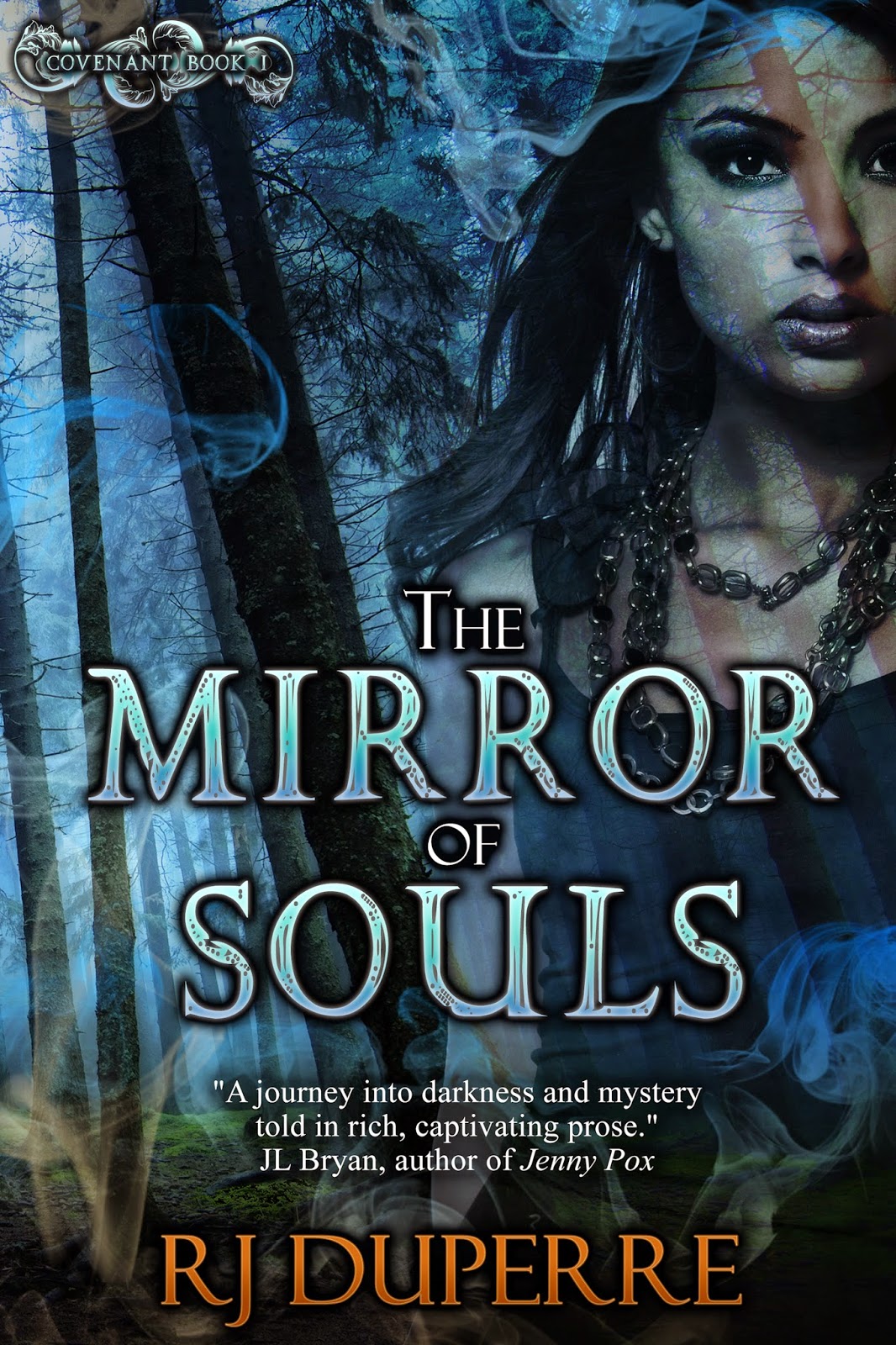
COVER REVEAL: THE MIRROR OF SOULS

Three years ago, I wrote a book called Silas. In that book was a young girl named Jacqueline Talbot, whose character I've been thinking about for a long, long time. I said then that I would one day write her story, and a few months ago, I began to do just that.

That's right, folks. The first book in the Covenant series, The Mirror of Souls, is soon to be published. For the first time ever, here's the cover:

http://www.amazon.com/Mirror-Souls-Covenant-Book-ebook/dp/B00R9PCV7Y

Product description:

Fifteen-year-old Jacqueline Talbot’s boyfriend Mal lives in the mirror of her makeup case. But then there’s never been anything normal about Jacqueline, nor it seems her new hometown of Mercy Hills.

With rumors of actual monsters in the woods, the popular kids taking an unhealthy interest in her, and the revealing of her own dark past, all Jacqueline wants to do is run away forever with Mal. Too bad he’s trapped in the mirror.

But when she learns the ancient forces of the town want to destroy everything she loves, the race is on to free the boy in the mirror, because he just might be the only one who knows how to stop them.


---------------------------------------------------------------------------

The book is currently on pre-order over at Amazon, and I plan on making it available across most platforms come its January 22nd release. This book (and series) is Young Adult with a horror slant. It'll be my first solo new release in over two years, and I'm quite excited about it. (Writing all those books with David Dalglish sure took a lot out of me!) Currently, I'm working on the 2nd book (The Chalice of Desire), with a tentative publication date at the end of April.

In the meantime, there will be another announcement coming in the next few weeks to add even further excitement! I will also be posting the prologue to The Mirror of Souls shortly. So until then, read a good book, dammit! Preferably one of mine!

THE MIRROR OF SOULS PRE-ORDER (CLICK TO PURCHASE)


Monday, January 9, 2012

Review: The Legend of Witchtrot Road (Spirit Guide #3) by E.J. Stevens

Rating: 4.7 out of 5


Man, do I love E.J. Stevens. She has such a pure innocence in her prose, as if she’s capturing just what it means to be young and in love and also, at the same time, have the weight of the world on your shoulders.


In The Legend of Witchtrot Road, the third installment in her Spirit Guide series, Stevens steps back a bit. The far-reaching story arch that encompassed the first two books is still present, but it is allowed to linger in the background, to heighten naturally. As a storyteller she reins herself in, focusing on the tale at hand rather than building her world outright.


In many ways, The Legend of Witchtrot Road is very similar to a midseason “event episode” of Buffy the Vampire Slayer. Yuki, our main character who smells the dead, has her own Scooby gang, and together they must solve the mysterious death of a classmate, whose untimely end came on the Witchtrot Road of the title. The road itself is steeped in myth, superstition, and dark history, and if the always stalwart Yuki is going to have a semblance of peace from her classmate’s lingering ghost, the answers to the mystery need to come quickly.


This is a tale of social conscience and, just like the great television show I mentioned earlier, takes some of the more pressing concerns facing our nation’s youth (bullying, eating disorders, the proliferation of drugs in the community, etc.) and presents them in a fantastic manner. It’s a type of storytelling that’s pure in intention and beautiful in message, especially when presented in a professional manner, which E.J. Stevens does with every book she puts out.


Now, even though the specifics of Yuki and company’s world aren’t explored in-depth, as I already stated, they are still there. There are some interesting developments when it comes to Simon (perhaps the best character in the series), and also certain events that made me, the reader, question whether or not Yuki and werewolf boyfriend Cal will indeed have the happily ever after they’ve seemed, until now, destined to live.


Yes, The Legend of Witchtrot Road is a fantastically naïve, touching, and thoughtful novel. Stevens continues on her journey as a writer, and you can plainly tell when you read the words she puts on the page that she continues to grow. The author has a wonderful story to tell, one that I thoroughly enjoyed and will certainly be passing down to my own daughter. To me, this is a coup of the YA genre, one that shouldn’t be missed.


Purchase The Legend of Witchtrot Road in Ebook format:


Saturday, August 27, 2011

Review: Tears of Requiem (Song of Dragons Book II) by Daniel Arenson

Rating: 4.5 out of 5


Look out, everyone! Big scaly beasts are on the loose!


Daniel Arenson returns with the second book in his Song of Dragons series, Tears of Requiem. We pick up the story right where Blood of Requiem leaves off, with the surviving Vir Requis – King Benedictus, his wife Lacrimosa, their daughter Agnus Dei, and Kyrie – fresh off their defeat and (near) fatal wounding of Benedictus’s brother and ruler of the land, Dies Irae. The griffins have been released, and hopefully life may come just a tad easier for these poor, harrowed folks.


No such luck, because Gloriae, the stolen daughter of Benedictus, has released the Nightshades, a race of strange shadow-creatures that swallow the souls of the living, leaving a hollowed (yet still living) husk behind. I can’t tell you how horrible this concept sounds, on theory and on paper. To have your soul sucked away and splintered into a million tiny pieces, while your consciousness is still aware, feeling every morsel of fear, longing, and pain it endures? It really is one of the more frightening concepts I’ve seen in a book.


Anyhow, I’m getting off track here. So Gloriae releases the nightshades, and then Dies Irae, who’s apparently indestructible – a dagger in the eye won’t kill this bastard? What’ll it take! – kicks his adopted (stolen) daughter out of his kingdom, for all intents and purposes disowning her. She eventually runs into the remaining Vir Requis she is intent on killing, to prove her loyalty to her “father”. Angst, fighting, seduction, and all sorts of other wackiness ensue.


From there, the book becomes a mad dash against time, with the survivors trying to figure out a way to defeat the ostensibly undefeatable nightshades and save what’s left of this new kingdom of the living dead. Blood is spilled, love is made, unexpected allies are brought together, and we all know that though there may be a light at the end of the tunnel for these tormented characters, they’re going to experience a good amount of tragedy first.


This is a more than worthy successor to the first book. It moves along very quickly, and it really boils down to a mad – though exceedingly violent – survival romp. The characters stay true to themselves, some make grand discoveries about themselves, and through it all an almost horror-novel sensation of isolation and fear washes over near every word.


And yet, unlike the first installment, there is an underlying sense of lightness. Strange as that is to say about a book as dark as this, there is actual levity in certain parts – particularly in the repartee between Agnus Dei and her father. These scenes worked very well to split up the doom and gloom that encompasses the rest of the story.


As for characters, Benedictus remains the stalwart old king, firm in his beliefs and yet nearly overwhelmed with guilt. Kyrie grows immensely, though he is still somewhat trapped in the timidity of being a very young man, especially when it comes to women. (As the father of two teenage boys, I can relate.) Agnus Dei demonstrates perhaps the most growth, as the angst that consumed her in the first book slowly wanes, revealing a strong and yet still sensitive woman underneath. About the only character that seemed a little off was Lacrimosa, as she sometimes acted a bit out of character, almost as a convenience for the plot. And Dies Irae is evil incarnate yet again, a bundle of hatred and brutality so single-minded in his goals that he’ll even sacrifice his own humanity to reach them…though it could be argued that, because of his loathing, he ceased to be human long ago.


As I said, Tears of Requiem is a brisk novel. It punches you in the gut from the very first chapter and only lets you regain your breath for moments at a time. It brings you on a journey of darkness and love, and asks the question of how this struggling race of people will ever survive in a world where everyone hates them. Even with this, it’s an overly fun read, a tale of mythical adventure. And Tears of Requiem does something very important for any series; it builds the tension of a fantastic storyline, with the sorrow at its conclusion setting up what is surely to be an intense – and imminently heartbreaking – conclusion to the series.


Bring it on, Mr. Arenson. I’m waiting.


Plot - 9

Characters - 9

Voice - 10

Execution - 8

Personal Enjoyment – 9


Overall – 45/50 (4.5/5)


Purchase Tears of Requiem in ebook format:


Wednesday, April 20, 2011

Review: A Sliver of Redemption by David Dalglish


Rating: 5 out of 5


This is a special review, so let’s start things off with some reflection.


I first reviewed The Weight of Blood by David Dalglish in July of 2010. It was my first foray into fantasy in years, and I didn’t know what to expect. I walked away from the experience in a state of wonder. I didn’t know that a world populated by orcs, elves, and dark magicians could be so captivating, could mean so much. I immediately fell in love with the characters. I understood their background, their point of view, and found it to be, overall, a much more than solid (not to mention valiant) story.


From there I went on to The Cost of Betrayal, and if I hadn’t fallen in love with Dalglish’s unique voice before, by the time I reached the end of that second novel I was hooked. The emotion was palpable, the plot complex, and the message was clear.


This was a story with something to say, and it did so in spades.


The following two books, The Death of Promises and The Shadows of Grace, I plowed through. Though very well done in their own rite, they never quite reached the very high bar that Dalglish set with Betrayal. Not to say they weren’t fantastic stories – they were – but there was just something special about that second book, something that grabbed hold of me and took me down a path that made me care about these characters – their actions and contemplations, their failures and victories – more than any reader really should. By the time I wrote the review for Grace, I’d made up my mind that as talented a storyteller as David Dalglish is, there was no way in hell he could top what he’d achieved so long ago in a book that at the time I stated was one of the five best books I’ve ever read.


So here we are now, and I’m going to tell you that he has surpassed himself. The list has changed, folks, for the narrative that unfolds in A Sliver of Redemption, the fifth and final novel in the Half-Orc opus, is second to absolutely none, including that aforementioned special second book. Hence, it has replaced Betrayal on my list of great novels.


The story of Redemption begins, as always, with the resolution of the cliffhanger from book four. The god Thulos has been released into the world of Dezrel, and he’s in a sour mood. His arrival forces our heroes to retreat and regroup, as they now find themselves faced with the nearly insurmountable odds of having to fight not only the followers of Karak, the god of order, but also an army of demons with a War God on its side.


Qurrah, the miserable half of the brothers Tun, continues on his quest for salvation, which began halfway through The Shadows of Grace when his batty girlfriend Tessanna gave birth to their stillborn child. His doubt in himself only grows here, as he’s forced to confront not only war demons but those inside himself, as well. This is a man who’s inflicted immeasurable horrors upon the world, a man who’s slaughtered the innocent, including (in a roundabout way) his beloved brother Harruq’s own daughter. He doesn’t understand why Harruq should forgive him. Hell, he doesn’t know if he could ever deserve forgiveness. And yet forgiveness is what he’s given, and this turns out to be the impulsion for him to look deeper into himself than he ever did before. What we have here is Qurrah stripped of all pretenses as to who he is. For the first time in the entirety of the series he’s naked, and what he sees in himself he loathes.


As for Harruq, our big lug of sanctity continues on his own quest for forgiveness. What Qurrah fails to realize is that Harruq forgives him because he’s been forgiven, as well. It doesn’t matter that Harruq’s transgressions all occurred four books ago, that his personal body count is thousands upon thousands less than his brother’s. Murder is murder, sin is sin. Just because one individual carries this out on a large scale and another on a much smaller one doesn’t matter. Harruq understands this, and he gives his brother the grace that his understanding (and integrity) demands.


The forces of good hunker down for the coming fight. There are new allies made and old allegiances rekindled, all while Thulos is hard at work recruiting added reinforcements to his army, for the portal to his own world is closed and cannot be reopened. These scenes in between battles are actually the best in the book until the end, as this is where the seeds of Qurrah’s redemption are planted. We get to see all the characters come to grips with their love and loss, we get to see them hesitant and doubtful, we get to see them as real people with the weight of the world on their shoulders. No one is spared from this – not the wizard Tarlak, not paladins Jerico and Lathaar, not Deathmask or Veliana. Not even King Antonil himself is spared. They all have their moments of weakness, and we’re left hanging as to whether the choices they make end up being the correct ones.


The groups end up separating, with most heading up to Mordeina to reclaim the city from Karak’s followers. Qurrah stays behind with the army from Omn, to protect the Bloodbrick Bridge. This is one of many battles that take place in the novel, but it gets special mention here, because this is where Qurrah earns his redemption. It is also, without a doubt, the most perfectly illustrated action (or chain of action) sequence that Dalglish has ever written.


The fight is long and drawn-out, with Velixar guiding his undead, the human army Thulos gathered, and the demon army. It is rife with ingenious strategy, drawn-out stalemates, and edge-of-your seat action. This may sound like a contradiction, but even the sluggish procession of time held me rapt at attention. There are twists and turns, times you feel the heroes will fail, times you think they’ll win, and then it seems certain they’ll fail once more. All this is encapsulated in what might be the most breathless sequence of events I have ever read.


And yet through it all, the entire battle – and I mean all of it – is encapsulated by Qurrah. Finally, after more than four hundred thousand words worth of him faltering and hating his own existence, he shows the intestinal fortitude to sacrifice himself for his fellow man. He wears himself to the bone and refuses to quit defending his charges, even when things seem most dire. When the battle finally ends, when he’s given everything he can (and then some), he goes on to offer up the last gift he has left. It is a moment of selflessness five books in the making, and he goes about it with reserve and respect, much like a hero should. Some would say, “finally!” to that. This reviewer, understanding the nature of his character and the unfortunate circumstances of his life, simply let out a cheer and said, “YOU ARE FORGIVEN.” This was Qurrah’s moment of glory, his chance to not repeal all his transgressions, but pay for them. And pay for them he does.


However, this being a David Dalglish novel, Qurrah’s work is not done, and neither are his trials. After all, this guy did bring about virtually every hardship the peoples of this world experienced. You’d be kidding yourself if you thought the author would take it easy on him.


In the end, the city is retaken and a final, massive battle is waged at the gates (and above) Mordeina. I said the battle of Bloodbrick was the most perfect battle Dalglish ever wrote; if that is true, the siege of Mordeina is by far his most epic. There are uprisings and mythical creatures, both heavenly and not. There is heroism aplenty and seething vengeance to be had. This all plays out over only thirty pages, and yet it seems so much bigger than that. The writing here is amazing. There are no wasted words, no extraneous descriptions. Everything just flows. The whole series has boiled down to this very moment, to the time when the cruel forces of Karak, now joined by Thulos, face off once and for all against the magnanimous armies of Ashuur. The payoff is brilliant, and also foretold. If anyone remembers the stand at the gates of Veldaren way back in book three, it serves as the perfect presage to what happens next.


I’m tempted to say that words can’t describe how good this book is, but of course I’m now writing a review, so that in and of itself is a lie. But trust me, it’s wonderful, the best Dalglish has ever written. The emotional threads aren’t only equal to those in The Cost of Betrayal, but actually surpass them, which I thought impossible.


And yet it is not sorrow that I felt as I swallowed these themes. There were no tears of mourning shed, no shudders while I held my family close. Instead there exists a pervasive sense of kindship, of hope, both for the loved ones now passed on and those whose lives we’ve written off as worthless. There is one particular scene towards the end that brought real tears to my eyes, for it is among the most beautiful and bittersweetly hopeful events I’ve ever read in literature. It made me think of my own past, my own lost loves, and wish I would have the opportunity to relish in their presence once more, if only for a moment. In a real way it is confirming the importance of our lives; in a selfish way, it allows us to feel wanted, to feel that we’ve done well with what we’ve been given, and gives us the confidence to move on.


In the past, when writing reviews of these books, I’ve gone out of my way to describe (sometimes in annoying detail) the religious premises presented within. On this occasion I will only say that good wins out over evil, though evil as Dalglish describes it is sometimes hard to define. There is not a single character that has no virtues (well, maybe one, but I’ll just forget about him). Even Velixar, the prophet of Karak and the biggest antagonist in the novel, is in many ways a sympathetic character. He has given his life (and unlife) to the one he believes in, and he actually believes he is doing the right thing.


Here’s the conundrum; both major religions of the realm are incomplete. Both have positive and negative points. Sure, the positive is exaggerated in Ashhur’s followers and the negative in Karak’s, but let’s be frank here – both sects have their failings. The truth of the matter is, there needs to be order, even in forgiveness, and there has to be mercy in ardor. This is why I have a sneaking suspicion that the tale of these two opposing gods is nowhere close to being finished. I hope they someday do find a resolution, because honestly, when and if they do, it might be the most perfect belief system ever created.


But that’s almost beside the point. This story – hell, this whole series – isn’t about warring gods, even though that was the backdrop. No, it’s about two underprivileged kids who go in opposing directions. It follows their failures and triumphs, their mistakes and good decisions. It’s about love, family, friendship, trust, and sacrifice. Though disguised as a work of dark fantasy, I don’t think I’ve ever read a series that ended up having such a positive message as this one. It’s a triumph of literature. I tell you this much in complete honesty. And A Sliver of Redemption is more than a final novel; it is, in many ways, a philosophical text, a learning tool. Through it one can learn of the goodness, the beauty, the love that exists in the world, even through layer after layer of ugliness. We can examine our relationships and see that there is no correct way to go about it, be it the idealized bond between Harruq and Aurelia, the journey of pain and loss between Qurrah and Tessanna, or the call to righteous duty that both joins and divides Lathaar and Mira (Tessanna’s twin goddess). And what is the one thing that binds them all together? Love. Love allows them to overcome the greatest of odds, to make the difficult decisions, to look past each others’ failings and choose the path most righteous. Yes, my friends, at the end of the day it is love, between lovers, brothers, family, friends, and allies, that wins the day.


And it is with great love that I call A Sliver of Redemption the greatest book Dalglish has ever written. Hell, it might be the best he’ll ever write in his lifetime. The emotion is real, the cost is high, and the payoff at the end is both satisfying and hopeful.It's the perfect end to a fantastic series, by all means the best set of stories I’ve ever read. In the eyes of this reviewer, it even blows away The Dark Tower, which I adored. And when I say blows away, I mean there isn’t a comparison. None. Nope. Not even close.


I can’t think of a more fitting end to this review than that.


Plot - 10

Characters - 10

Voice - 10

Execution - 10

Personal Enjoyment – 10


Overall – 50/50 (5/5)


Purchase A Sliver of Redemption in the following formats:

Paperback:


Ebook:


Wednesday, March 23, 2011

Review: The Ryel Saga by Carolyn Kephart

Rating: 4.9 out of 5


Verbosity.


Most of the time when I pick up a book and see this in action, I roll my eyes and mutter, “Oh, no.” There are just way too many authors that fall in love with their own words, with their ability to craft clever phrasing. They overdo it and overdo it until you just can’t stand to look at the endlessly droning sequences of words any longer. This is usually the result of a writer who’s trying to emulate “traditional” literature without understand what that is in the first place. I’ve struggled through a few of these types of books, and it never ends well.


However, there is a rare breed of verbosity that stems not from self-indulgence, but the uncanny ability to turn a manuscript into magical, epic poetry. In these instances the words are necessary. They build atmosphere, envelop the mind, and spiral the reader into a world they could’ve never imagined.


That, my friends, is Carolyn Kephart’s The Ryel Saga in a nutshell.


I have to admit that at first I was a little wary of this book. It’s long (twice my usual 120k word count limit), it’s wordy, and the plotline spirals in many different directions, seemingly at once. But what I failed to take into account as I first dove in was that this is the work of an author at the top of her game, a writer who fully understands human emotion, doubt, and yearning, a woman who knows how to build a world and recognizes that there are many, many different types of beauty…even in darkness.


The Ryel Saga is named after its main protagonist, Ryel Mirai, a wysard (aka magician, sorcerer, mage) from the mystical city of Markul. He leaves the city in which he’s been raised since his early teen years (when he was lured from his home in the Steppes by his uncle Edris) when he is offered a vision of his dearly loved mother, stricken with sickness and dying. Being well-trained and powerful in the use of the Arts (the Markulian term for magic), and having been trained to be a healer, Ryel brings it upon himself to save her.


Along the way he discovers that he is being sought by a daemon named Dagar, an old sorcerer of dead magic (I guess you could call him a necromancer) whose soul (or rai, as it’s called in the book) lives on even after his body has been destroyed. It seems Dagar wants Ryel’s body, and he’ll stop at nothing – and stoop as low as he can, making Ryel’s life far beyond miserable – to make that happen.


Ryel has other adventures, as well. He uncovers lost family, finds out information about his beloved uncle Edris that rattles his world and turns him into a man possessed, falls in love, thwarts a revolution, starts a revolution, uncovers the mysteries of his Art and its legacy, suffers an ancient malady, and finally fights in a massive battle to save not just the city of Almancar, but the entire realm, as well.


There. I’ve just compressed seven-hundred pages of plot into three short paragraphs. Of course this isn’t everything there is to it – there are intricacies aplenty woven throughout the story – but if I were to make this an actual recap, the review would be fifty pages long.


And besides that – and though this might be funny to say – the strange thing about The Ryel Saga is that the plot, as complex and well thought out as it is, is almost a secondary aspect of the book. Actually, now that I think about it, it might be third in line.


The first thing that grabbed me about the book was the scenery. I mentioned at the beginning how this reminded me of poetry, and the settings are what made me think of this concept. Each city and realm visited is so vividly described that they come to life in the mind’s eye. But, oddly, there is a lot left to the imagination, as well. This might sound like a contradiction, but it’s not. From the sway of the Steppes grasses to the mists surrounding Markul to the gardens and excesses of Almancar to the filthy, deprived buildings in and around the cursed city of Ormala, most everything is explained…so much so that what is left out feels mystical, such as the feel of the street under foot or the gust of the wind on a character’s face. It’s a strange sensation to have while reading…and a wonderful one.


The second, and most fantastic of all, are the emotional ties that bind the characters, both to each other and themselves. There is love aplenty – between siblings, lovers, old rivals, even enemies. There is hatred, shown the most in disease and the scars that result from a life filled with torment. (Two characters, the brothers Essern, beautifully illustrate this point. Look out for their characters. My two favorites in the entire book, after Ryel, himself.) There is the anguish of loss, and the hope that some how, some way, those lost loves might be returned to you. There is longing, for life, love, and family. There is honor amongst heroes, and none among the religious.


And this, as a matter of fact, might be the most profound aspect of the story. In the world of Destimar, religion is as much a bane on the populace as would be cancer on the human body. Religious leaders use their preaching to motivate, organize, and manipulate their charges. And yet the text does not lose sight of the everyday person’s need for belief. I completely loved and appreciated this facet of author Kephart’s storytelling. She comes across as evenhanded, highlighting the wonders and necessity of faith while at the same time illustrating via her fantasy world the way leaders throughout history have used the peoples’ desire for understanding and salvation to turn one sect against the other, triumphing the longing of the many in order to heighten the gains of the few. She doesn’t form an opinion about this and isn’t preachy; she just presents it as simple fact. Though truth be told this reviewer thinks she tips her hand at the end and lets us know, in the tiniest of ways, how she might actually feel about the subject of spiritualism and conviction. I could be wrong, but that’s the way it seemed to me.


Above all else, The Ryel Saga is the story of faith – faith in one’s self, in one’s principles, in one’s ability to overcome. Ryel is the embodiment of this. He believes in his quest. He may doubt himself at times, but he never truly falters. He knows what he’s capable of and trusts in his Art, his magic, and his capacity to learn. In fact, throughout the whole book he never stops learning. He’s like a giant sponge, an advocate for the quest for knowledge, of the viewpoint that to gain knowledge only leads to the desire for more knowledge, and that in the end, we can never stop, but we’d be damned to a life of slow death if we stopped trying.


In case any reading this review need it spelled out for them, despite my initial misgivings, I fell in love with this book. The Ryel Saga is a poignant, touching, somber, and exhilarating read, all in one. The sentiments are real, the small scenes take priority, and the action sequences are tastefully done. In a lot of ways it’s like going on vacation to the island of St. Thomas. You know it’s ornate, you know it’s a commitment, and yet once you get there you can’t help but sit back and enjoy the experience. Reading this book is just like that – like sitting in the sun, letting the emotion of the moment grab you, and allowing it to take you where it may. To run your eyes over each word is a grand event by every definition of the word grand. Let it capture you, let it overwhelm you. Once you reach the end, you’ll understand that you’ve undergone something rare, something beautiful, something you might only see two or three times in your life.


At least this reviewer did. And it’s definitely an experience I’ll never forget.


(Final note to say I docked a single point from the execution grade because of some minor formatting errors, aka a few missing quotes and some character name confusion. These weren’t major issues, however, so the damage is minimal. Definitely does not take away from the enjoyment of the story. Obviously.)


Plot - 10

Characters - 10

Voice - 10

Execution - 9

Personal Enjoyment – 10

Overall – 4.9/50 (4.9/5)


Purchase The Ryel Saga in ebook format for the following devices:


Tuesday, February 15, 2011

Review: The Gods of Dream by Daniel Arenson

Rating: 4.8 out of 5


All my life I’ve held the opinion that fairy tales come to us from the darkest depths of imagination. They are stories of suffering and grief wrapped up in a bundle of cutesy imagery, mythical beasts, and social disorder. They come as warnings: Little Red Riding Hood and Hansel and Gretel against the allure and dangers of child predators, Jack and the Bean Stock against the perils of experimentation and exploration without first understanding the consequences…and these are only a few examples. They are at their core disturbing, grim tales, meant to pass along a necessary social message.


This is what The Gods of Dream, written by Daniel Arenson, accomplishes. In spades.


The Gods of Dream is the tale of Cade and Tasha, twins from a never-disclosed, war-torn country, whose parents were killed during a bombing at a local market. They are forced to leave their home and travel to a new country, where they are alone, afraid, and despondent. Tasha hates life and has tried multiple times to end it. Cade does his best to support and coddle her, his own war-ravaged hands constant reminders of the past they left behind. He does everything he can to give his beloved twin a reason to live.


Well, they have one. For reasons never fully explained (and thankfully so), Cade and Tasha have been granted access to Eloria, the true land of Dream. In this reality they are Talon and Sunflower, children of the illusory wilderness, unscarred (both physically and emotionally) by their guilt, sorrow, and the horrors of their past. When in Dream they cavort like the free youths they should have been, before the real world cruelly tore all that away from them.


This carefree existence is not to last long, however, for it seems that Phobetor, the ruler of Nightmare, obviously the counterpoint to Dream, has set his sights on conquering the sleeping paradise. Cade is recruited into the fight, told he must defeat the evil prince, and heads out on a long, long quest. Tasha, for some reason left out of the original plan (actually there is a reason, though it’s never spoken, and that reason is sublime and necessary), sneaks in and joins her beloved brother on his journey, disguised as a mouse.


Along the way Cade and Tasha meet all sorts of strange and wonderful creatures. They are the gods of Dream, and they’re fantastic creations with roots firmly planted in Native American (or any other naturalistic culture’s) lore. Each resides in (and is master of) a certain location and aspect of Dream. These gods have lived for thousands of years, and they take it upon themselves to assist Cade and Tasha in whatever way they can.


The twins journey for weeks (possibly months) through the landscape of Dream and enter Nightmare. I could go on and on describing every step of their journey, but I won’t. This review would be ten pages long if I did that. Just believe that there are a great many plot points in the book that are worth mentioning, but what interests me more than anything are themes, and that’s what I’m here to discuss right now.


One of the first things I noticed when the chapters started shifting between events happening in Dream and Nightmare, respectively, was the paradigm of these realms. Just as Dream’s gods are constructs of the “real world” – elks, cats, lions, hippos, pandas, etc – so is the landscape. It is filled with earthly trees, grass, rivers, and gardens of flowers. There is a day and night. There are oceans and beluga whales. There is also a natural order to the land, represented in pockets that depict the seasons of Earth. The lands of Nightmare, on the other hand, are cracked and burnt in some places; in others, the ground is covered with what could be skin. The trees there are likewise fleshy, covered with eyeballs. The creatures that inhabit it are gruesome, beasts of fangs, spikes, hooks, fur, and bodies that don’t seem to follow a natural order (aka shark head on a wolf’s body, etc). These unsavory citizens carry themselves with utter hatred and intend to harm, and every emotion is taken to the extreme. To break it down, Dream is the land of balance and healthy imagination; Nightmare of radicalism and brooding darkness. Sure, at first glance one might say, “But doesn’t the existence of Nightmare balance out Dream?” And the answer to that would be no. Some of Nightmare’s inhabitants were born in Dream, and they were born the way they are – wicked, cursed, unsavory – and at least one was told he did not have to leave despite this. That, in and of itself, demonstrates that the world of Dream is evenhanded. Because of this, Nightmare is actually a weight that tips the scales toward darkness.


(Not to mention that Dream exists seemingly of its own accord, while Nightmare needs a motor. It’s powered by a subway system that runs beneath its soil. I won’t explain what this subway system is or how it operates, because I wouldn’t want to give that away, but trust me when I say it’s one of the most inspired and original ideas I’ve ever set my eyes upon.)


The creative inventions of the world aside, the emotional threads are spectacularly done as well, in fact more so. Cade and Tasha really feel like damaged souls. They’re full of doubt and guilt. Tasha is nearly pathetic in her unhappiness, and you pity Cade for how hard he tries, even while he’s doubting his every action. In every way it makes sense that these two were the ones chosen to save Dream, because they needed to be saved just as much. They needed to rediscover beauty even in the face of ugliness and evil. And I think that might be the main point: that there is splendor all around you, that if only you’d take the time to actually deal with the hardships that come upon you, you’d bust out on the other side realizing all you’ve had and all you could have. Tasha, herself, embodies this. She is small in soul and scope at the start of the novel. In this way, it’s no wonder that she chooses to be a mouse when she crosses into Dream. For she is afraid of everything, her fear and sorrow have made her as insignificant as a creature that makes its home in shredded bits of discarded paper. In this case, that discarded paper is her life, both former and present.


All of this is sad yet beautiful to read, and I have to admit that on more than one occasion I found myself getting teary – especially at the beginning and end of the book. The middle is where the action is, and it is wonderful, but let me tell you…the emotions that run through these opening and closing segments are just about perfect. We see Tasha staring at her bandaged, scarred wrists, and we sob for her, when it would be very easy, if the work wasn’t crafted as well as it is, to say, “Just get it over with, already.” The writing helps in this regard, with flowing sentences and vivid description. Really, I can’t say enough good things about it.


So why, one might ask, did it not receive a perfect score? (Yeah, I have to be a little bit critical.) Two reasons. First of all, author Arenson has a habit of repeating things, important points that need to be remembered (such as the reminders that Cade and Tasha have to save Dream…or else.) Now, I get that, but I thought it was done just a tad too much. I understand that this is the author’s style, however, and it really doesn’t distract from the story. The second is the character of Phobetor, the ruler of Nightmare. His repartee his demon wife is eerily similar to the interplay between a pair of characters in another one of Arenson’s books. Now, I almost didn’t mention this, but I felt the need to, if only to assure readers who’ve read the author’s other works that these sections are short and few. In fact, there are only two scenes that actually have both characters in them. However, they’re both towards the beginning of the book, and I want to tell any who might notice that the characters are, in fact, quite different, as the meat of the tale bears out and their interactions cease. I wouldn’t want anyone to put the book down because of something minor such as this.


On a whole, The Gods of Dream is a very impressive, nearly impeccable work of art. It’s The Neverending Story meets The Dark Crystal meets The Odyssey. It surges in parts, lingers in others, and always leaves the reader with the impression that they’re taking in something important. It teaches a lesson about pain and what it takes to withstand it. It shows how important life is, how important love is, how important family is, be them blood or otherwise. It takes you on its journey of imagination and leaves you both panting and sighing at the fantastically bittersweet, yet hopeful, ending.


In other words, it’s magnificent. And I have a sneaking suspicion The Gods of Dream is going to end up being one of the best books I read in 2011. It gets the highest recommendation from me that a single book could possibly ever get.


Plot - 10

Characters - 9

Voice - 10

Execution - 9

Personal Enjoyment – 10


Overall – 48/50 (4.8/5)


Purchase The Gods of Dream in ebook format for the:


Thursday, December 16, 2010

Interview with Amanda Hocking


-----------------------------------

This interview with Amanda Hocking was conducted via email over a span of three days. Amanda is the author of seven books and is one of the highest-volume independent booksellers. To read more about Amanda, her books, and her life, visit her website, My Blood Approves.

-----------------------------------


Journal of Always: Hello, Amanda, and thank you for taking some time out of your obviously packed schedule to spend some time with us. Let's get started, shall we?

You've had great success self-publishing your books (currently seven books out there right now, soon to be more). My question is, how did you approach marketing your writing before you decided to go it on your own, and what was the final straw that caused you to forgo the traditional route?

Amanda Hocking: It was a bit of luck, actually. I think it was a tweet from DA of Chester French, who I’ve said for a long time is the smartest man on Twitter. He’d posted a link to an article about self-publishing, and it mentioned Joe Konrath and his success with it. After years of hearing horror stories about self-publishing, vanity presses, and Publish America, I was wary of the idea at first.

But the more I thought about it, the more I realized I had nothing to lose. I had done everything I could think to get published traditionally.

Besides that, I had an absurd goal to be published by the time I was 26 because that’s how old Stephen King was when he first published, so I knew had to do something to get going.

I didn’t do much marketing before I uploaded my first book. I mentioned it on Twitter and my blog, but I didn’t have any real followers there. When I’d had them on sale for a few weeks, I made an announcement at Kindleboards, and I mentioned them a few places on the Amazon forums. That was about it for promotion.

JOA: Can you give us a brief overview as to your sales progress? Did they start slow, or simply take off immediately?

AH: What I didn’t realize then and do now is that my sales were always a little above average, and I have no explanation for this. The first day I think I sold 1 or 2 books, and I’ve never sold any less than that. I was averaging 3 sales a day after the first two weeks they’d been out.

My sales really began to take off in June, and I think that was in large part because I began contacting book bloggers in May, asking if they would want to review my book. A few of them did, and that has been tremendously helpful. I went from averaging 20 sales a day in May to 137 sales a day in June.

My sales continued to grow each month, but not super dramatically from that. In October, I actually sold fewer books than I did in September. But then in November, for reasons I don’t really know, my sales exploded. They jumped from 157 a day in October to 704 per day in November.

JOA: Has your success changed the way you look at yourself as a writer? How has it altered your lifestyle?

AH: I think, in a really weird way, I actually had more conviction in my writing ability before I was published than I do now. And that opinion hasn’t changed because of negative reviews or anything. It’s because I realized that people are actually paying to read what I have to say, and it makes me more aware of how good the story needs to be to entertain them.

Before, I was my only audience, and I always entertained myself. So it was easier to believe that what I did was good.

My lifestyle hasn’t really changed, other than the fact that I don’t have a day job anymore. This has all happened so fast, it hasn’t had much of a chance to change. My bills are all caught up for the first time in about three or four years, though. So that’s nice.

JOA: Do you in any way worry that your distinctive voice could be tainted by the need to remain a top seller?


AH: Not really. I think anything I write sounds like me, if that makes sense. If you give me any topic to write about – be it Nazi’s or aliens – I would still write it the way I write. My stuff tends be character driven with a lot of dialogue and pop culture references. So even if I do follow trends to stay on top, I’ll still be writing an Amanda Hocking book that sounds like me.

JOA: Your success has brought about a lot of attention, as well. Your name constantly pops up in blog articles, and in a way you are looked at as an icon in the independent community. How do you feel about this? Is it in any way uncomfortable for you?


AH: It’s a little strange.

JOA: Of all the books you've written, which is your favorite? Why?

AH: My favorite to write is probably Ascend, the third book in the Trylle Trilogy. And I’m not just saying that because it’s coming out soon. The Trylle Trilogy is something I really believe in. I had a lot of fun writing it.

The best book I’ve written, though, I think is Hollowland. That was actually the hardest for me to write.

JOA: As you well know, I read and thoroughly loved Hollowland. Why do you say it was the hardest to write?


AH: Having a female lead that strong was difficult. Remy is really tough, like super bad ass, and I juxtaposed her with a male lead who is less so. That dynamic was hard to write. Usually, even if you have a strong female, the male is at worst as strong as her, and he’s often stronger. But Remy had to be hard and world weary without being a bitch or cold, and her suitor had to soften her and humanize her, but he couldn’t be weak. Finding that balance was very hard.


It really made me think about stereotypes and roles of men and women in general. It was kind of eye opening in the way I thought them, and the way I feel like society thinks about them.


JOA: It's interesting that you should mention stereotypes. Not to get too far away from the subject of writing, but what is your opinion on the state of women's rights in this country? Personally, I see trends backsliding, as if people have forgotten what the purpose of feminism was in the first place. This scares me. Do you see this, as well?


AH: What drives me nuts about feminism is the idea that women have to be certain things or they’re not strong. That certain types of strengths and abilities are exalted and others are frowned upon.

My mom only ever wanted to get married and have kids. That’s it. But sometimes people treat that like it’s a bad thing. Like, “Oh, that’s all you wanted to do with your life?” Raising kids is hella hard. That’s why I don’t have any. And I don’t have a husband, either. I’d rather focus on my career than a family. But I don’t see either choice as being less than the other.

The idea of feminism is that women are equals and free to do things as they choose. And they should be, but it’s not fair to take away half of a choice because it’s stereotypically feminine.

I’ve never thought I couldn’t do anything because I was a girl. And no girl should. If you want to go out an save the world, more power to you. If you want to get married and be a secretary, equal power to you. That’s what it should be about.

But in all honesty, I think equality in general has taken a massive back slide.

JOA: There’s so much I could ask in response to this, but I think that would make this interview stretch into eternity, so let’s keep with the writing theme.

The majority of your work falls under the umbrella of paranormal romance. What is it about this sub-genre that appeals to you?

AH: I saw Dark Crystal for the first time when I was two, and it scared the hell out of me. Like nightmares terrified. Even some of the goblins in Labyrinth scare me, even as an adult. And yet this is my favorite stuff.

Well-done fantasy should scare you. You’re not afraid if you don’t believe in it, and it’s the belief that gives fantasy it’s magic. Fear and wonder are separated by a very thin line.

Romance, I think, is the other side of fantasy. You don’t fall in love if you don’t believe, and that’s all part of the same wonder as fantasy. I’m equally as in love with Jareth as I am frightened by the goblins in Labyrinth.

Good fantasy should scare you and make you fall in love. That’s all paranormal romance is, the blatant combination of the best parts of make believe.

JOA: Speaking of romance, do you see a difference in the ways male and female writers depict intimacy? If you do, what kind of things can we learn from the opposite sex by exploring these contrasting aspects more deeply?


AH: I don’t read a lot of romance by male authors, which I just realized, so it’s hard for me to get a clear comparison. Books by male authors I read tend to be satirical and political, like Kurt Vonnegut and Chuck Palahniuk. They don’t address intimacy in a big way, and if they do, it’s more clinical and blunt. In the case of someone like Bret Easton Ellis, it can be downright graphic and violent.


Books I read by female authors are more romance, like Richelle Mead and Claudia Gray. Their YA intimacy is very nuanced and subtle, but Mead’s Succubus books are very graphic, and frequent.


The differences I can see from men and women, from that random sampling, is that the men wright about it more instructionally, as in, “We had sex,” and the women right about it more emotionally, “It felt amazing when we had sex.”


But I am comparing books that are written in two very different styles. In general, the men’s books are written that way. It’s more “This happened,” and with women, it’s more “How I felt when this happened.”

So that’s my really long answer.


JOA: Your work (especially the My Blood Approves series) has been compared to Stephanie Myers' series. How are your books different?


AH: The My Blood Approves series does have similarities to Twilight. I knew that going in. I think it branches way off in its own, especially as the series goes on.


The biggest differences I think from her books in mine is that I wanted my characters to have fun, at least sometimes. Yes, there’s peril and heart ache and all that. But I wanted flawed characters who made mistakes and laughed and were sometimes silly and sometimes immature, but they were real. They were what people are, not ideals of what people should be. Some people don’t like that, and that’s fair. They are reading fantasy.


But it’s important to me that a seventeen-year-old girl acts like a seventeen-year-old girl. Like many (but not all), teenagers, she thinks she knows more than she does, that she doesn’t need high school, and the first time she falls in love, it consumes her. I’m not saying she should be a role model, but she was never intended be. She was simply supposed to be real.


My other books I don’t think are like Twilight. The Trylle Trilogy still gets compared to it, though, which doesn’t make much sense to me. Yes, there is romance and it is paranormal, but it’s much more similar to Labyrinth and The Princess Diaries than Twilight, but nobody has made those comparisons.


So I think part of that is because she’s become the definition of this genre now. Regardless of what books came before her with similar themes.

JOA: What are you reading now? What new authors out there excite you?


AH: Right now I am reading Third World America by Arianna Huffington and Palo Alto by James Franco. Arianna’s book is very interesting. It’s about the decline of the American dream. Palo Alto is a collection of somewhat bizarre stories by actor James Franco.

I recently Land of Ash, which I really dug. It’s gotten me into shorty story collections. I like reading, but my mind’s always on about thirty things at once, so short stories are working really well for my attention span right now. I also really loved JL Bryan’s Jenny Pox.


But honestly, lately, I haven’t been reading that many new books. I’ve just been reading books I’ve read before. I’ve worked my way through most of Vonnegut’s stuff this year, and I reread Survivor and Invisible Monsters by Chuck Palahnuk recently. I really want to reread Good Omens but it’s not available on the Kindle, so I’m pretty bummed. 


JOA: What does the future hold for you? Are there any exciting events or new releases on the horizon? Inquiring minds want to know.


AH: I can’t even begin to speculate what the future holds. My life feels so bizarre right now, and I have no idea what’s going to happen next.

As for future projects, I have two more books coming out in the next couple weeks. The final book in the Trylle Trilogy Ascend, and a novella spinoff from the My Blood Approves series.


JOA: Thank you for spending some time with me over the last few days, Amanda. I rather enjoyed myself, and I hope others will find this interview informative and entertaining. Good luck to you, and we'll chat soon.


AH: Thank you for having me. And I enjoyed myself too. :)