Showing posts with label religion. Show all posts

Saturday, December 20, 2014

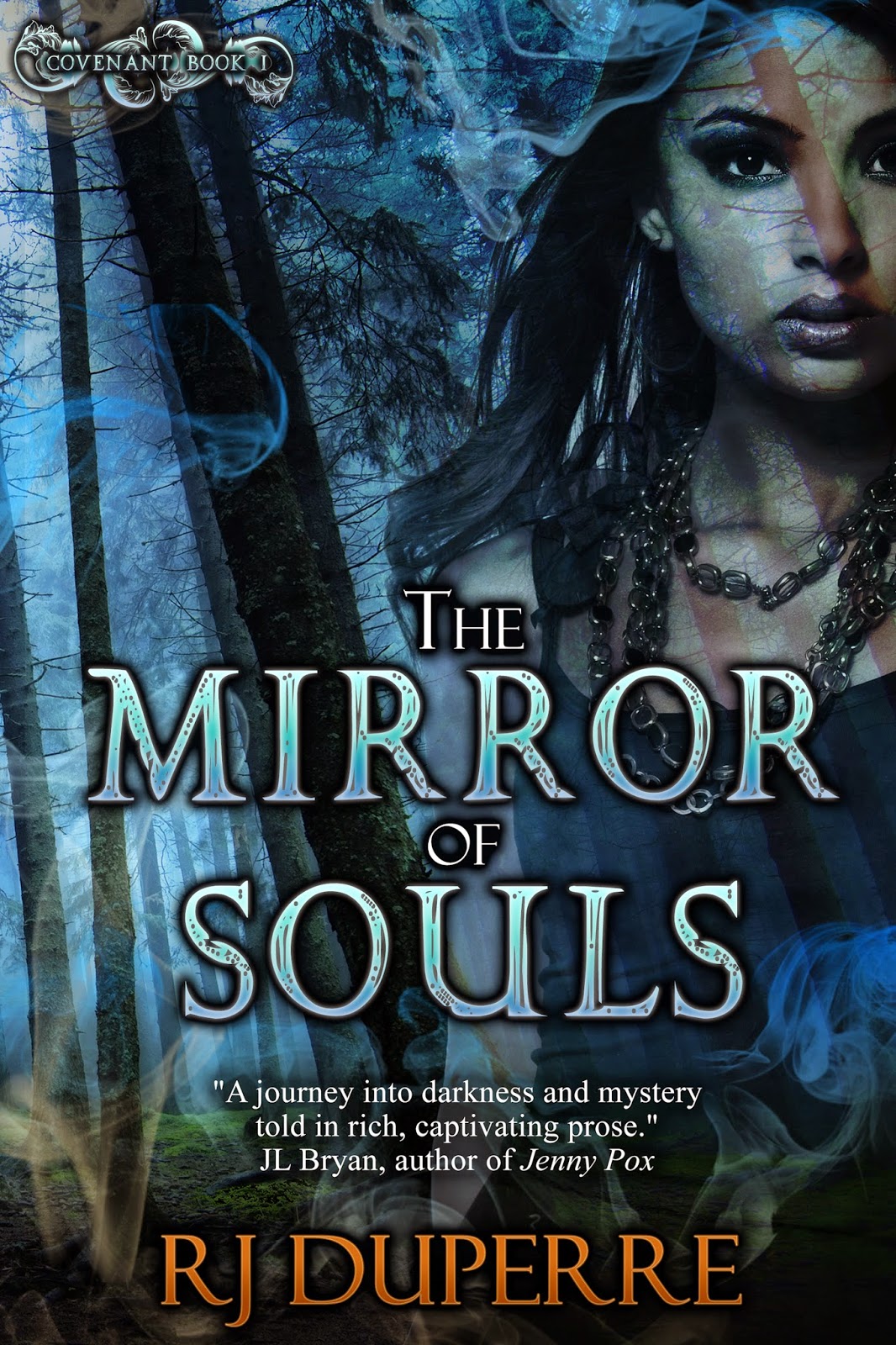
COVER REVEAL: THE MIRROR OF SOULS

Three years ago, I wrote a book called Silas. In that book was a young girl named Jacqueline Talbot, whose character I've been thinking about for a long, long time. I said then that I would one day write her story, and a few months ago, I began to do just that.

That's right, folks. The first book in the Covenant series, The Mirror of Souls, is soon to be published. For the first time ever, here's the cover:

http://www.amazon.com/Mirror-Souls-Covenant-Book-ebook/dp/B00R9PCV7Y

Product description:

Fifteen-year-old Jacqueline Talbot’s boyfriend Mal lives in the mirror of her makeup case. But then there’s never been anything normal about Jacqueline, nor it seems her new hometown of Mercy Hills.

With rumors of actual monsters in the woods, the popular kids taking an unhealthy interest in her, and the revealing of her own dark past, all Jacqueline wants to do is run away forever with Mal. Too bad he’s trapped in the mirror.

But when she learns the ancient forces of the town want to destroy everything she loves, the race is on to free the boy in the mirror, because he just might be the only one who knows how to stop them.


---------------------------------------------------------------------------

The book is currently on pre-order over at Amazon, and I plan on making it available across most platforms come its January 22nd release. This book (and series) is Young Adult with a horror slant. It'll be my first solo new release in over two years, and I'm quite excited about it. (Writing all those books with David Dalglish sure took a lot out of me!) Currently, I'm working on the 2nd book (The Chalice of Desire), with a tentative publication date at the end of April.

In the meantime, there will be another announcement coming in the next few weeks to add even further excitement! I will also be posting the prologue to The Mirror of Souls shortly. So until then, read a good book, dammit! Preferably one of mine!

THE MIRROR OF SOULS PRE-ORDER (CLICK TO PURCHASE)


Wednesday, August 3, 2011

Review: The Black God's War: Splendor and Ruin Book I by Moses Siregar

Rating: 4.5 out of 5


(Reviewer’s note: I received this book as an ARC from the author)


Spirituality and religion. These words have been the salvation and bane of human existence since we first formed coherent thought. From the tribal convictions of the earliest African nations to the ancient Greeks to the world as we know it today, we have celebrated them together, found solace through their teachings, fought and killed each other over their differences.


What Moses Siregar has sought to do in The Black God’s War: Splendor and Ruin Book I is show the dangers of intransigent religious belief, to do for literature what Aqualung by Jethro Tull did for music: demonstrate how spirituality and religion are projections of our own thoughts, fears, adorations, and prejudices, that desires propel our convictions rather than the other way around.


The Black God’s War tell the story of two warring peoples – the Rezzians, modeled after early European culture (Celtic in particular) who believe in a covenant of ten gods, and the Pawelons, whose principles and appearances mirror a more eastern, Buddhist/Indian ideal. We are first introduced to Lucia, the daughter of the Rezzian king Vieri, at the birth of her brother Caio, who, by the way of markings on his hands, is proclaimed the people’s Haizzem, or savior. It is here that Lucia is first haunted by Lord Danato, the god of the underworld according to Rezzian myth. He kills her mother and sets in motion a series of nightmare experiences that will forever alter the makeup of this innocent young girl.


By the time Caio is nineteen, the war that has begun (for nefarious reasons disguised as virtue) between the Rezzians and Pawelons has been raging for ten years. Lucia does all she can to fulfill her father’s wishes for victory, though she sometimes has a hard time telling what is real and what is a dream because of Lord Danato’s nightly visits. Caio, on the other hand, is gentle in nature. He wants peace, to use his uncanny abilities to heal people, not fight a war he doesn’t believe in. But being the Haizzem, it is his sacred duty to lead Rezzia’s army, so he does so…reluctantly at first.


On the other end of the spectrum we have Rao, the only remaining prince of Pawelon. He has become a sage, the most powerful sage in the history of Pawelon, and he takes it upon himself, along with his best friend Aayu, to travel from his homeland and assist his father, the Rajah Devak, in defense of their country against the invading Rezzian army. Like Caio, he wants peace – but unlike the Haizzem, his father, though brutal, is a generally fair man, and is allowed the courtesy of his own convictions. In almost every way this makes him the better of the Haizzem, one whose ability to love and forgive is below no other.


As the story progresses, we are thrown into multiple “coincidental” scenarios that are seemingly set up by the Rezzian gods. At least, this is the way things are presented on the surface. If one looks a little deeper, they will see that all the gods did was point the way. Every decision made, though sometimes predictable, was solely the result of the free thoughts and actions of the characters. They are all bound by their upbringing and nature, and it isn’t until they realize this that all the major players begin to actually change. And the nature of the gods, themselves, are brought into question as well. Are they timeless deities or a result of the combined subconscious power of the people? It’s a question the story asks often in the latter stages, and it’s one that really makes one think.


I won’t go any further on the plot other than to say the battle rages on, the gods get involved in some rather surprising ways, and eventually there is a rather brilliant climax that left me grinning from ear to ear.


As a novel, The Black God’s War works on many levels. For sheer entertainment value, we have many epic battle sequences. As a love story, we have Lucia and her brother’s protector, Ilario, as well as Rao and his lover, the young, beautiful, and precocious Narayani. As a spiritual tome we have many segments discussing the nature of spirituality and its effects on the people who practice it. And it’s also a tragedy, in by which only through sacrifice and understanding the nature of balance can the issues presented ever be truly resolved.


And that’s really what the book is about, when it all boils down to it. We have two differing opinions, western pre-Christian (that looks very much like early Christianity, despite the numerous deities), and the nature-loving eastern “godless” peoples. In some ways this book could be looked at as a fantasy retelling of the Crusades, as the lily-white forces descend on the dark-skinned masses, trying to “enlighten” them by basically killing off a whole gamut of folks. How one could ever read a spiritual text and think the murdering of a whole ethnic group because they don’t believe in your god is justified is beyond me. But it happens, and just as in this tale, the results are always disastrous.


Siregar does a fantastic job of painting both faiths in a kind light, though the Pawelon’s, by the nature of their not having started the war, obviously fares better in presentation. It allows for almost every character to come across as sympathetic – Lucia especially. Her tormented nature shines through in everything she does, from her conflictions to her anger to her confusion over the role she has to play in the grand scheme of things. She is the main character of this novel, and more than lives up to it.


That being said, if Lucia is the main character, Rao is the one who steals the show. With his compassion and understanding, his willingness to take risks and ability to see through the veil of righteous deceit, he comes across as an individual who could one day be a spiritual leader strong enough to lead his people to enlightenment. He is young in this book – about the same age as Caio – and yet we see a glimmer of the man he could be, the man he is well on his way to becoming. It really is quite beautiful.


And do you know why it’s beautiful? Because as a character, Rao is balanced. And as I said, this is the main point I think Siregar is trying to make. When his prose speaks of the nature of life and death, of the scales that must always be adjusted, he’s talking as much about the cosmos in general as he is any religious belief. The concept of Karma, after all, can be boiled down to a scientific principal – for every action there is an equal opposing reaction. We see it in nature, we see it in the universe, we see it in people. For every (perceived) evil in the world, there is an equal (perceived) good. I write “perceived” because, just as Siregar presents in The Black God’s War, evil is subjective, not quantifiable on any realistic scale. This book has no evil characters, even though the characters themselves often think their opposing party is such. And in order for their war to end, each individual must come to their own conclusions and make choices – yes, choices, free-thinking choices – about what is right, what is wrong, and what path will best lead to a sense of harmony, both between their respective peoples and within themselves. Some make this discovery, others don’t. You’ll have to read it to find out which is which and what happens when their choices are made.


For a first-time author, Siregar surprised me with the strength of his voice. It’s consistent, and he knows what he wants to say. However, it’s not perfect. He can be a bit wordy at times, and a couple of his major characters (a Pawelon sage and the Rezzian king) are a bit one-note. Normally I wouldn’t make a huge deal out of this, but with the other characters being so fleshed out, complex, and believable, the presence of these less-than-satisfactory entities was all the more obvious. Not a huge deal in the grand scheme of things, but something I feel I have to mention. As it stands, the author isn’t quite up to the level of Salvatore, Dalglish, or Pyle, but he’s not too far away. This book is proof of that.


In conclusion, The Black God’s War is a unique experience. The plot is intricate, the characters even more so, and the message is one of beauty. By the time you flip to the last few pages, I hope you have the shivers just as I did, which is how I know that Moses Siregar is going to be around a long time, and his voice, one of unity, passion, and loving sensibilities, is important – in the world at large as well as literature.


So bravo, Mr. Siregar. You wrote a damn good book. You should be very proud.


Plot - 9

Characters - 8

Voice - 9

Execution - 9

Personal Enjoyment – 10


Overall – 45/50 (4.5/5)


Purchase The Black God's War: Splendor and Ruin Book I in ebook for the Kindle at:


Sunday, December 5, 2010

Review: The Shadows of Grace by David Dalglish


Rating: 4.7 out of 5


Would you sacrifice your child for the world?


Questions. Life, many times, comes down to having the strength to ask oneself the correct ones, leaving the answers almost secondary. In literature, we judge characters, especially those who’ve fallen from grace, by their actions. And yet those actions are often a direct reflection of not having the intestinal fortitude to look past the shiny veneer of their unfortunate circumstances and ask, “Is what has happened to me my own fault?” A great example of this would be Humbert Humbert from Vladimir Nabokov’s Lolita. He is a character who is obsessed with an underage girl, and throughout the novel he questions not what depravity lies within himself that causes him to fall for (and run off with) this “nymphette”, but the societal pressures and breakdowns that force him to do so. He hates his life and his actions yet takes no action to remedy – or understand – them. In the end, he dies the same way he lived – ignorant and afraid of asking the right questions.


In The Shadows of Grace, the fourth book in David Dalglish’s fantastic and captivating Half-Orc series, the questions come to the forefront. No longer are the brothers and heart of the story, Harruq and Qurrah, slogging through life letting events guide their actions. They make choices, they contemplate their place in the world. Qurrah, for his part, finally begins asking questions of himself – only he’s not asking the right ones. The line at the beginning of this review is his. However, he has it all wrong. For any parent, for any being living in any form of society, the real question should be “Would I sacrifice myself for my child?” However, the simple fact that he asks that question shows a change in his character. He’s learning, pondering his station in life and looking inward rather than reacting to the horrors that have always surrounded him, for the first time.


Harruq is on a different path. He’s asking the right questions for someone in his situation. He’s led his people, folks he’s learned to love and appreciate, to safety. And yet he fights the inner battle of regret. He had a chance to kill his brother in the past and couldn’t do it. Should he have? Is the price of his love for his brother worth the thousands who’ve died by his hand, not the least of which being his own beloved daughter? Is Qurrah worthy of forgiveness for his sins? Does that even matter?


The answer to this is complicated. It’s both a resounding NO and a heartfelt YES! The brothers are a metaphor for choice and faith in one’s abilities. They are a fable of sorts. Think of two inner-city siblings, raised in a culture of violence and fear. One overcomes his upbringing, goes off to school, and becomes a productive and admirable member of society. The other takes the easy way out. He falls prey to the corruption that surrounds him, joins gangs, lives a life of aggression and brutality. The first example we put on a pedestal, idolizing for his ability to rise above. The latter is vilified, looked at as a lost cause and written off. Should he be? If we are able to commend the successful brother for overcoming the trials and tribulations of a rough childhood, shouldn’t we also feel pity for those who aren’t able to triumph? Shouldn’t we try to place ourselves in his situation and ask, “If that were me, would I have the strength to be the better man?” Most times, we don’t. Just look at the headlines of any local newspaper if you require proof of this. Are they worthy of redemption? Some would say no. But they are. It’s hard to look at the horrors they’ve committed and see a soul worth saving. It is the great among us, those with an almost mystical amount of compassion, who have the ability to forgive. Not forget, forgive. And in this particular book, it is Harruq who encapsulates this. He has no reason to forgive his brother. Qurrah has given him nothing but pain. And yet he does. He sees through the veneer of hatred and revenge and bestows upon his brother the greatest gift he can – a clean slate. It’s a beautiful occurrence, and the scene at the end of the book where this happens is a stunning piece of writing.


The Shadows of Grace is a very, very deep book. Besides the aforementioned plotlines involving Harruq and Qurrah’s path to redemption, there is political intrigue, huge battles, and emotional threads that run throughout most every word on the page. We are reunited with old friends, watch some of these friends give up their lives for the greater good, and are given a fresh perspective on matters of faith and self-sacrifice. Harruq and the Eschaton, along with King Antonil, lead the survivors from Velderan into the city of Mordeina, where they find peace and rest after heading off to warn neighboring towns of the approaching armies of orc and undead. Ultimately, truces are made between warring factions and battles are fought. Long-held prejudices are put aside. Before too long, we end up back in Mordeina, where a siege of the great city is under way. The war demons brought through the portal held open by Qurrah and Velixar are ready to exterminate all life. This scene, in particular, is written spectacularly. It delves even further into Harruq’s growing sense of honor and grace (there’s that word again) and the violence that follows his epiphany on the state of his life and faith is almost a foregone conclusion…though there is a particularly unexpected occurrence that helps swing the almost impossible odds against our heroes back in their favor. I won’t discuss it much, because it’s a bit of a spoiler, but I will say that some might find it to be a deus ex machina. It’s not. If you sit back and think about the plot, of where Dalglish is taking this tale, it makes perfect sense.


These points are interesting, but this book really finds its legs in the aforesaid growth of Harruq and Qurrah and the overall message I think the author has presented to us. And it is this message, the parable that the storyline of all the books have combined to now reveal, that is the most wonderful aspect of all.


What we have here is an allegory – or a critique, if you will – of Christianity. It’s brilliant, and I never thought of it, never noticed the events occurring could be discerned in this way before. There are three factions at odds with each other, in the form of the gods the author has created: Karak, Ashhur and Celestia. Karak is the personification of the Old Testament; demanding of obedience and order, self-sacrifice, and complete devotion. Ashhur reflects the New Testament; he demands only love and forgiveness, and all who worship him hold the promise that they will one day be blessed by a lifetime in the golden afterlife. Celestia is the universe itself, a deity devoted to balance. She refuses to let the scales tip too far in one direction or the other – in other words, cause and effect, or every action has an equal or opposite reaction. The three of them combine to form its own holy trinity of sorts, the three-become-one. I might think that if all the particulars sat down and thought about it for a second, they might find that they’ve been fighting the wrong war all along.


Just like the gods, the major characters have biblical counterparts. Qurrah is Abraham, the man asked to forgo everything, even his beloved child, for the sake of a God that seems outwardly cruel and remorseless. His faith is constantly tested, and just as often as not, he fails those tests. Harruq is Saint Peter, the loyal ruffian who denied Jesus yet, in the end, was the one charged with bringing His church to the people. And Tessanna, Qurrah’s lover, is paganism made flesh, all blood magic, sacred runes, and without a singular frame of reference to base her sanity upon. They form their own trinity, as well, and I have no doubt that, come the fifth and final book, it will be the interplay between these six differing yet similar characters that will form the crux of both the outcome and its message.


This was a fantastic book. It was my favorite of the author’s, actually, until the last fifty or so pages. There, I had two issues. One is with a character that emerges toward that point, a great servant of Karak named Melorak. The way he came into being seemed…convoluted somehow. It was hard for me to relate to or care about him. Secondly, after the battle of Mordeina, Dalglish seemed to rush the proceedings, as if he couldn’t wait to get to the final confrontation. I can’t blame him, as that concluding scene is beautifully written, possibly the greatest of the entire series, full of both sorrow and a morose sort of joy. If I’m being honest, it didn’t really bother me – the story is too good to be thrown off by something such as this – but still feel I must mention it, and it did prevent me from placing this tome ahead of its only emotional equal, The Cost of Betrayal.


That being said, this is a special story. All of the threads Dalglish has created are coming to a head. There is a battle brewing in the future, and the soul of everyone in Neldar is at stake. Come take the journey, get lost in it. Cry with the characters, feel their joy and pain, let them into your heart.


You’ll be glad you did. Trust me on this.


Plot - 10

Characters - 8

Voice - 10

Execution - 9

Personal Enjoyment – 10


Overall – 47/50 (4.7/5)


Purchase The Shadows of Grace


Wednesday, October 13, 2010

Interview With Author Noah Mullette-Gillman


-------------------------------------------------------------

The following interview with Noah Mullette-Gillman was conducted via email over the span of two days. It is more of a conversation than an interview, and it was truly an interesting and informative experience. If you would like more information about Noah, his work, and his views, please visit his website. If you would like to check out his book, The White Hairs, please visit its Amazon product page.

------------------------------------------------------------


Journal of Always: Hello, Noah, and welcome to the Journal! I'd like to start things off by asking about your background and what started you off on your journey as a writer?

Noah Mullette-Gillman: Robert, thank you for inviting me.

I was born in a wonderful town in northern New Jersey called Montclair. Growing up, my grandmother’s house was across the street. My town was green and full of trees, but also had all of the advantages of civilization: book stores, video arcades, malls, many friends’ houses only yards away, everything I could want.

When I was a little boy, my mother asked me what I wanted to be when I grew up. I told her that I would be an artist.

“Why?”

“Because I draw such beautiful pictures!”

Now, you may think that this means that I changed my mind along the way, but in my opinion nothing could be farther from the truth. The skills that I gained drawing as a little boy are the same skills I have used when singing, acting, writing lyrics, writing poems, writing comic books, writing screen-plays, and now writing novels. My growth in any of these disciplines has all added together to help me become the artist that I am today.

If anyone is skeptical of this point, I suggest they read the first few pages of The White Hairs, and first imagine it was written by a singer, then once more and imagine that it was written by a visual artist. You can clearly see the DNA of my development in my work.

In my acknowledgments I thanked several musicians whose work has been particularly inspirational to me. I did not simply mean that it gave me creative fuel, but that in fact I learned my craft, in large part, from them!

I owe more to The Cure than to any single novelist. That’s the truth!

But all along, throughout my development I knew that “one day” writing novels would be the pinnacle of my work. Even when I was on stage on Boston singing with one of my bands, I believed that “one day” my mind would have developed to the point where I would be capable of doing the sort of projects I am now undertaking.

This was always the plan.

JOA: I agree with you wholeheartedly - art in all forms have symbiotic relationships with each other. I, myself was a musician, and thought that would be my life. But over the years that plan...shifted. Do I regret this turn of events? Absolutely not. It was naive of me, and I love where I am today. Add to that the fact I'm a much better writer than I ever was a musician.

But music is still extremely important to me. It fuels my love of literature, because in many ways the best music is nothing but, well, musical poetry. It means something. So for you, and your mentioning of The Cure (love Robert Smith, by the way), what is it in particular about their music, or the music you listen to in general, that inspires you?

NMG: The split between literature and music is a modern invention. For most of history, they were a single whole. The Iliad and the Odyssey were written to be SUNG! Once upon a time, there were storytellers who would memorize these stories/songs. They would know the whole thing, every page, every word by heart.

I don’t know when or why the single art form became split. I think the blame has to be laid upon the proliferation of books.

I can’t remember which Greek it was who expressed concern over the spread of the written word. Maybe Homer? He commented that he was worried man would lose his natural powers of memory if he could simply look down at a sheet of paper to remember what came next. It has certainly happened.

More, I think that the nature of writing has changed. We no longer have the need to write stories that would perform well when told out loud. When I lived in Boston I used to spend every Monday night at a club called the “Lizard Lounge.” A group of us would bring poetry and we would read it accompanied by a jazz band. To be clear – we would not arrange things with the band ahead of time. They didn’t know what we were going to bring them. They improvised around our work. This, in turn, led to us writing spoken-word poetry that had the right spaces and meters so that it would work well when read out loud. More than that, so that it would give the band something that they could work with.

To me, the Cure will always first of all mean the song; “Plainsong,” the first song on the album Disintegration. Yes, they have a lot of other wonderful music, but that’s the first thing that comes to mind. That seems to me to be the essence. I spent high school with the lyrics to that song written down on a piece of paper above my bed.

You could feel the swirl of emotion and weather coming together in the beginning, well before the lyrics started. The lyrics then arrived sparse and incomplete. It begins in the middle of a conversation. We don’t know what’s going on. We don’t know who the ‘I’ and ‘she’ are.
But we can feel it. The music tells our hearts how the characters' bodies feel. We hear their chests moving. We feel the ache. We know that even as the conversation is mundane, that the feelings are powerful, overwhelming.

Then, while maintaining that simplicity of dialogue, the conversation becomes more profound. Listening to the song teaches me how to sing, how to beat my heart, how to allow emotion to find itself from where it has been frozen in my chest and incarnate itself in the world.

Where else, outside of this song, could I learn so well how to create art, or how to be human?

Can I ask you how music has influenced your writing?

JOA: For myself, music has always been a necessary hedonistic indulgence. I'm an overly emotional individual, and I've spent much of my life trying to push that down during waking hours, which I think is a symptom of the hidden Puritanical elements that still exist today in the northeast. We are hard, we are cold, we are logical and driven. But that's all a facade, isn't it? And it's also the reason so many children grow up confused, not understanding how to deal with those emotions. After all, their parents don't, so why should they?

But music was what allowed me (and others throughout history) to finally take hold of those emotions and make them real, make them meaty. When I was young and angry, of course I gravitated toward the heavier, angrier music. When I grew up a bit, but still wanted to hold on to that Puritanical logic, I fell in love with Rush, because they were the perfect mix between intellect and invention. And as I got older still, my tastes have merged. Now, any song that strikes an emotional chord in me, I love. It could be the most mundane pop song ever written, and yet if in the bridge the music dips and the singer's voice cracks even the slightest bit, I'm enthralled.

And of course, with me being so addicted to emotions, both experiencing them and observing them in others, I can honestly say that music has directly affected the way I write. My major purpose is to give my characters that emotional experience, to run them through the gambit and hopefully make the reader feel what they feel. I'm not sure if I've accomplished that yet, but it's my end goal. And I have music to thank for that, because without it, I'd be a shell of the expressive soul I am now...and almost definitely not an author.

Well, in a way I just explained part of my purpose as a writer. What about you, Noah? What do you want to get across to the readers? Do you want to enlighten, simply entertain? I know the answer is somewhere in the middle, but which way do you lean more?

NMG: My work isn’t agenda motivated. The point isn’t to “say” something. However, my work isn’t meant to be light escapism either. Part of the creative act, for me, is to create big and exciting ideas. This is actually the easy part for me. I have tons of ideas written down in my notebook, and even a slew of unfinished novels in which all I had was the big idea, but I feel like that’s only half of the equation.

To have a story worth bringing into the world, I feel that I need to also accomplish something on a deeper level. Reading my book needs to allow my audience an opportunity to make their lives better. There needs to be a struggle and accomplishment on the psychological plane. NOT because I want to make the world a better place or have some sort of influence on my readers, but I believe that the only stories that really matter to people are the ones that operate on this level!

In some of my other interviews I’ve spoken a little on what I see as the difference between “Fantasy” and “Mythology.” I think that fantasy’s job is to entertain. Mythology has a deeper responsibility. Usually, people think of mythology as being ancient, starring Zeus or maybe Baphomet. But I think the more important difference between the two is that in the case of one everything that happens only occurs at the surface level – everything is essentially what it appears to be. A dragon is a fire-breathing monster. In a work of mythology a dragon is a representation of a construct in the psyche. It still has to be entertaining, but it has the potential to grab and involve the reader in a much more visceral way, even without their necessarily understanding why, as their subconscious - which does understand the world of symbols - responds to the action.

Think about Star Wars. I would call that mythology. You could write a book about the hidden meanings. Why did Luke have to travel to a swamp planet to learn about The Force? Then why did Yoda put him in a situation, in the cave, where he would battle what appeared to be Darth Vader – only to discover his own face on the dark lord’s corpse?

Think about Star Trek. As brilliant as the original series may have been, I think that a phaser was a phaser. A star-ship was a star-ship. Unless I have missed something, I think you can take those stories at more-or-less face value. And they never meant as much to me as the first Star Wars movies did!

So, to answer your question – I believe that my audience will be more entertained when I offer the opportunity for them to use my work to find some sort of forward progress in their lives. To my mind, it is a necessary component to the sorts of stories that I want to tell.

JOA: The White Hairs, your first book, is a novella packed with commentary on spirituality that seems to promote an inclusive philosophy when it comes to different systems of beliefs. How does this aspect of your writing equate with your own personal beliefs?

NMG: Inclusive….exclusive….Hmm… I’m not sure if the story is either to be honest. I neither tried to stay neutral in the Christianity/Budhism/Hindu/Druidry/Judaism/Muslim/Asartu/Olympian debate, nor to take a side. I believe I stepped entirely around it!

We encounter two belief systems in The White Hairs. The first is that of the white haired creatures themselves. They have ceremonies where the leave their bodies astrally. This involves a world view that holds that giants came before and gave them most of their knowledge. It involves a strong belief that there is no afterlife whatsoever, that when one dies that is the end. They base this on their ability to see astral bodies, souls, and not seeing any anything remain after death.

Later in the book, Farshoul meets an old human man. The old man believes that when he dies his soul will go up on the mountains and be reunited with the souls of his ancestors, but I really don’t say any more than that about his beliefs.

Is this inclusive? I don’t know. Perhaps in the same sense that Star Wars is religiously inclusive.
The White Hairs is not a religious work.

Myself, I am not a member of any religion and have never been. I was raised by Astrologers; my mother, my father, and my grandmother across the street. Obviously, astrology is not a religion. We celebrated Christmas because of Santa Claus. We did not go to Church, although I was christened as a baby. In many ways, I think that I have more in common with religious minds than atheistic ones. The concept of a purely mechanistic universe is contrary to my physical observations.

I am a serious thinker. I do have a degree in Philosophy, and rather than being afraid of or hesitant to consider metaphysical issues, I’m drawn greedily to them. I love thinking hard! And so, I am actively working on the problems which religions attempt to solve. So far, I believe that I have three maxims. You could say that they are my beliefs:

#1 The world is on purpose.

#2 It loves me.

#3 I do not believe in any deity who is less emotionally mature than I am.

Number one is related to my experience of life. I see signs, I see patterns. I am aware enough to be certain that “Life” is intentional - has intentions and plans of its own - even more, has a sense of humor!

Number two is entirely experiential. My own life has been hard more than it has been easy. My manner, and my way, and my undying optimism usually lead people to think I have lived a charmed life, but nothing could be farther from the truth. Still, throughout it all, I am aware experientially of the love of the Universe, taken as a totality. Some might call it “God’s love.” I do not.

Number three is an indictment of the stories we find in the old books. The idea that any being could exist for billions of years and still behave like a spoiled and selfish child is ridiculous at its face. No, I don’t believe in a God who would create people so that he could test them and then punish some for not loving him enough. That’s silly. I don’t believe in a God who has created the universe simply for his own sake. Neither do I believe, as the Buddhists do, that the goal of our many incarnations is to cease to exist simply to stop the pain… That strikes me as chillingly dark, and turns existence pointless.

If there is something like a “God” in charge, that being would be generous and kind well beyond the dreams of Mahatma Ghandi and Mother Theresa. He would be selfless and would have no motivation beyond helping us all to grow and become better than we are. Even if he were less than that a few billion years old, I believe that simply having all of that time to think would have straightened him out.

You might consider that Farshoul’s difficult journey did turn out to be for his profit at the end. As terrible as his loss was, he was only put through it so that he could grow. That might be my own belief system creeping in. Throughout all of my travails, what keeps me going is a hard-worn faith that this will all turn out to be for the best. Life has made me suffer, simply to give me the abilities I will need later on.

JOA: You see, answers like these are why I wanted to interview you.

I like (and agree with) your three points. Of most interest to me is number three, however. It has long been my standing as a man raised Roman-Catholic that the God of the bible is nothing more than an abusive father figure. What kind of deity, with the power of the cosmos at its hands, would require servitude or worship? I much prefer the "Conversations With God" point of view - though even that version, when you think about it, is entirely anchored in humanity. How could it not be?

Which is why it bothers me to see the "new" rise of dogmatic belief in this country and around the world. What do you feel are the reasons for this? Why are so many now turning to restrictive guidelines and theocratic fanaticism?

NMG: We are at a turning point in history now. So many of the structures which worked for the last few centuries or more don’t work anymore. We are at a point now when an intelligent and spiritually awake person is likely to find the Bible wanting.

So much of the fanaticism that we see now is a desperate attempt to hold onto a dead paradigm. The Bible doesn’t make sense. A modern mind that actually applies itself to it will not react to these stories the way that someone did a few centuries ago.

I remember in college sitting down and reading the first few pages of the Bible. It says, clear as day, that there are other gods! It says that there were giants! As far as I could tell, it didn’t have very much in common with the Christianity I was familiar with. Perhaps it is impossible for a modern mind to accept that everyone on earth is descended from two people who lived together in a garden, had a couple of kids. One of their sons murdered the other and THEN MOVED AWAY TO THE CITY! In an earlier age, when no one could read, and no one was taught critical thinking, maybe not as many people realized how little sense this made. But it’s all falling apart now.

A couple of hundred years ago, in our culture, ‘Christian’ was a synonym for ‘good.’ But now, in 2010, I find it impossible to hear the words ‘Catholic Priest’ without them also summoning up the words ‘child abuse.’ I don’t say this to be cruel. It is a fact of history.

Vast sections of the stories in the Bible are older than Jewish culture. We can read the Babylonian and Egyptian texts and see for ourselves that most of Jesus’ story was lifted from Osiris, and from even Zeus himself! That leaves us with the choice to either conclude that the Devil is trying to trick us, or that the Bible is just a bunch of old stories collected as best they could by some Jewish scholars and applied to the newest state religion.

The limitations in compassion, empathy, and humanity which we see in the Bible are best excused as being the limits of humanity at that time in history. When the story of Job was written, a brilliant man did his best to answer the question of why bad things happen to good people.

Now, the interesting question to me is, if we accept that the author of Job was simply a brilliant man, does that mean that the universe is random and barren? The conversation at this point seems to be limited to the choices of “Religious” and “Atheist;” with Agnostic there for people who simply haven’t made up their minds. I don’t personally find that I fit in any of these categories. I am not a member of a religion. I do not believe in a mechanistic random universe, and I am not an Agnostic. I am actually quite clear about what I do believe, as limited and humble as that is.

But what if there is something really there that we are missing out on? Yes, the Bible is broken, but does that mean the Universe is random and mechanical? I think that, now that so many of us are free of the control of the religions that tell us what to think, we finally have the opportunity to have real and personal relationships with the beyond.

This is an important part of what I did in The White Hairs. Farshoul is told that he cannot leave his body anymore, so he goes off and does it all alone. This is akin to finding Eternity outside of the bounds of any church, and religion. In only the second scene of my book, he does something like leaving his church. Yes, he suffers because of it. He doesn’t have the protections that the rules and structure of White Hair society would have given him, but he also sees things, like the Giants, that his people don’t anymore.

I am a spiritual person who finds all religions wanting. Whatever spiritual progress I make in this life, I have to do alone. This is EXACTLY like Farshoul.

Robert, you were raised Roman Catholic. The most ferociously atheistic people I know were all raised Catholic. I understand that it can be a rough passage. Where do you find yourself spiritually/religiously at this point in your life? And what effect do you feel it has had on your own writing?

JOA: It's funny, really. For a long time, I considered myself an atheist. I just couldn't understand how hypocritical the concept of religion was. The picking and choosing of which rules and regulations to follow was a large part of it. How could you use Leviticus to decry homosexuality and then ignore all of the other hateful and imposing aphorisms? Just because those particular rules don't fit with what you want to accomplish?

Over the years, however, I realized that I never was an atheist, though I gave that belief (or lack thereof) lip service. In truth, I've always been fascinated with the fantastic, and atheism is by definition limiting in that regard. How can I think to write about such magical, out-of-this world occurrences and completely disregard the possibility that there is something much larger than ourselves out there? I couldn't. So therefore, I redefined myself by holding on to the things I do believe in, such as cosmic consciousness, reincarnation, and the glory of possibilities. And I think this is definitely reflected in my own writing. I want the reader to think, more than anything. I don't care what religion you are, but dammit, open your mind! You might like what you find there.

In that way, Noah, I really do envy your work. As any who've read the review would know, I adored the story of The White Hairs. The way you weave your ideas of spirituality into it and make it clear while at the same time being ambiguous is fantastic. So what do you have coming next? Are you sticking in genre (which is a funny question, because I don't even know what genre TWH fits into), or moving on to something different?

NMG:
Robert, that’s very kind of you to say. No, I don’t know what genre the White Hairs is either. I spoke to a newspaper reporter last week and she asked me if The White Hairs was Fantasy or Sci-Fi. I told her that it must not be Fantasy, because I don’t have elves or dwarves, but I didn’t know if I could call it Sci-Fi either because I don’t have space-ships and laser-guns!

Which is one reason I think it was a mixed choice to have made this my first book. I think that it’s a good beginning for those who do read it, but that it may be a little more difficult to find readers for The White Hairs because no one goes online saying to themselves; “Ah! I'm really in the mood for a well-written story about creatures sort of like Yeti who leave the world traveling astrally, something that will help me work through my own sense of loss over the years and concerns about life after death!”

I think that a less-well written, but more expected book would have had an easier time finding initial readers.

I am almost finished writing the next novel that I’m going to release. In one sense it is very different than The White Hairs. It’s horror/sci-fi. I’m actually dying to tell you all about it, but I think I should wait just a little longer until it’s all ready. (Ask me again in a few weeks!) I will say that it deals with the fall of civilization, and then also life in the post-apocalyptic world. However, it isn’t about zombies, or angels, or a nuclear war, or any device that you’ve seen before. I really think I’ve come up with something new!

That said, in order to be satisfied with my work I need it to have depth. I need to battle my demons on the page. The next book will give you just as much to chew on about the nature of life as The White Hairs, but I hope it will also have an easier time grabbing readers than my first book has had so far.

You mention that you were never an atheist. I have been trying for years to articulate an argument in my mind that suggests that there may not actually be such a thing as atheists – rather that there is simply a large portion of the population who believe that “God”/the Universe/Life doesn’t care. I think that the way we humans relate to the world is to anthropomorphize everything. We are wired to get angry at the car when it won’t start. We are thankful when things go our way, and then angry at ___ when it doesn’t. Even if someone intellectually believes in a mechanistic world, I don’t think anyone actually lives as though it were an impersonal and random place. I don’t think humans are capable. Of course, whether we can then draw a conclusion as to the nature of the universe or simply the nature of humans is another question.

You know, I wrote a zombie story once. It was a cowboy-zombie movie called The Green Sunset. I moved out to L.A. to try and sell it, and it almost looked like it could sell a few times, although it never ended up happening. You’ve written a book about Zombies (The Fall.) In what ways do you think that work was influenced by your own deeper beliefs, or was it primarily intended as entertainment? For the record, my zombie story actually was, but of course the master of the genre, George Romero, is famous for using zombies to tell stories with as much deep psychological meaning as a good Thor and Loki story!

JOA: First off, now that I think about it for a bit, you can classify your book by simply placing it beneath the all-encompassing "speculative fiction" umbrella. Because really, specfic can be about pretty much anything.

As for The Fall, the story is definitely influenced by my convictions, and my life experience. I wanted to populate a world with real people who have real problems and reveal how every single one of them is flawed in some intrinsic way. Also, my belief that there is no such thing as pure good or pure evil is something I felt the need to present. Even the bad guys in the book aren't completely bad (or at least didn't start out that way), and the "heroes" are all damaged. They make poor decisions, they act selfishly. Just like we all do and have, at one time or another.

In fact, the whole series is nothing but one huge allegory for the things in life that concern me - racism and bigotry against differing sects of people being foremost in my mind. There wasn't much of that in the first book, but starting with book two, it's there, and it cannot be ignored. This is a direct reflection of one of the most maddening statements I've heard, which has been spreading like wildfire through society - "Racism in America is dead." I've worked blue-collar jobs for going on twenty years now. I can tell you from first-hand experience that racism is surely not dead in this country. I see it every day. It might not be as in-your-face blatant as it was in the past, but it's still there. Be it through the snide comments said on the sly, ignoring an individual for a promotion or an easier job, or simply not inviting those of differing ethnicities out for a beer after a long work day, it's there. Sure, we've made strides. Great strides. But that doesn't mean the work is done. And I fear that the more people who proclaim racism to be dead could potentially damage all the work we've done over the years. It will never be dead. Proposition 8 is proof of this. As long as there are people who are different than others, it will exist. We simply have to work, work, work at it, and never, ever forget how bad it's been.

Do you agree?

NMG: For much of my life, I never considered race a big issue. I grew up in New Jersey. My school was about 50% white and 50% black - completely integrated! When I was a freshman in high school, my family moved to upstate New York, an area with probably about 96% white people. For the first time I heard kids telling jokes using the "N-word." It was shocking to me. My college experience was also mostly white.

But it wasn't until I moved to Los Angeles that I saw real racism. L.A. is an incredibly segmented society. The Blacks stay in their part of town. the Hispanics in theirs. The Whites are in the north. Heck, until I moved to L.A., I had thought of Hispanics as White! It was all very strange for me to discover that many of them didn't!

No, racism is not dead and I think that it is playing a big role in current events in our country. If you want to understand the Tea-Party you can't do it without looking at race. If you want to understand the war that the richest people in the country seem to be waging against the rest of us, you have to understand that large role that race plays in that.

What racism has done is become taboo. We cannot talk about it. There are rules about which races are allowed to use which words...and a large portion of the country afraid of what the explosion in population among the poor and uneducated classes/races means to the country.

I think it all points to the larger issue that we in the U.S. do not feel like we are a "people." We do not feel that the good of us all is linked to the good of every one of us. We are divided by race, by education, by geography, even by political party - as if that were a football team and not a discussion about how to run the country.

I will always remember a conversation I had with an older gentleman in a bar in Boston. he asked me if I was a Red Sox or a Yankees fan. Now, I don't personally care about sports. I have no opinion. I asked him; "Do you like the Red Sox because you think they're better, or because they're from your town?" He admitted it was because they were from his town.... I think that a lot of what goes on politically can be traced similarly. There are places who see the Republicans as their "home team" despite the fact that every Republican policy is against the self-interest of the people living there....

I wonder if our country is simply too large? Or if our perspective is too small? We need to re-imagine the world.

JOA: Like Agent Starling says in Silence of the Lambs, "We covet what we see every day." Perhaps this gets to the root of the problem. For as small as the world has become, what with the internet and one thousand cable channels, things are also becoming horribly segmented. I don't know if folks are simply not going outside of their comfort zones. And honestly, I'm really not sure if they ever have. On a personal level I feel I must integrate myself into everything in order to have a balanced view of the world. I want to know about different religions, governments, and social principles. It does me no good to segregate myself from that which makes me uncomfortable. It doesn't make me a better person. And I wouldn't be able to have conversations such as this if I did that, either.

This has been a wonderful interview experience, Noah. I would like to thank you for that. And I would like to close things out with one final question. Based upon the multitude of subjects we've covered here, what is your wish for the direction we, as a people, will eventually take? Realistically, what kind of understanding about life, spirituality, and community to you hope everyday folks will eventually achieve?

NMG: I've really enjoyed this. You know, when I started my own interview series a couple of months ago at www.noahmullette-gillman.com one of my biggest motivations was to try and create a format that allowed for more depth than online author interviews usually enjoy - but I think you've gone well beyond what I accomplished! Bravo!

As far as your final question: I'd like to see people start enjoying thinking. As simple as that sounds, it's a rare trait. So many people are not in habit of serious concentration, of in-depth consideration. We aren't taught to be any better than intellectually shallow. I think that when we learn to be greedy for serious intellectualism, then anything will become possible.

JOA:
Thank you for chatting with me over these last few days, Noah. And be sure to let me know when the next novel is finished. It would be an honor for me to take a look at it.

NMG: It's been a pleasure, and don't be surprised if I take you up on that offer in the not-so-distant future!

Monday, September 20, 2010

Review: The Death of Promises by David Dalglish


Rating: 4.7 out of 5


“To the abyss with it all. I just want to burn stuff.”


For anyone who’s been following this blog, it should be readily apparent that I hold the Half-Orc series by David Dalglish in the highest regard. I love the characters, the darkness, the action, and the passion his work portrays. I read them in quick bursts, usually finishing in less than three days, and this book, “Death of Promises”, the third in the series, was no different.


This novel is a bit of an oddity. We pick up the story shortly after the last one ended, with Qurrah Tun and his batty goddess-girlfriend, Tessanna, off in search of a mythical spellbook he hopes will be able to cure his lover’s fractured mind. He takes hold of the book, only to discover that it is not what it seems; it is not a tome of spells, you see, but the journal of Qurrah’s old master, Velixar. Just like everything else in this book, there are layers upon layers of manipulation and underhanded motives.


The reason I say “oddity” is because the author takes a huge risk here. For the first half of the novel he focuses not on the heroes of the story – the Eschaton, which includes Qurrah’s brother, Harruq – but instead on the antiheroes. He outlines Qurrah’s further descent into madness, reintroduces Velixar, who has risen from the grave yet again, and demonstrates how their combined powers of darkness sweep the land, bringing a vile sort of order to the chaos that surrounds the forgotten realms, where those cursed by the gods now live. It is risky, and also very brave, storytelling. Some might bristle at this development, but I appreciated it. Especially after the emotional end to the last book, it made sense to go in this direction. That one was Harruq’s chance to shine, to show us his depth of caring and forgiveness; this is Qurrah’s opportunity to radiate the darkness he clutches inside him. That juxtaposition is necessary. If this is indeed a redemption story, then we need to see how far down the rabbit hole the villains will go. And let me tell you, they go far.


Come the second half of the novel, all the old particulars are back in force. In fact, the last third of the text is dedicated to a single, huge battle – the invasion of Velderan by the forces gathered by Qurrah, Tessanna, and Velixar. It is an intricately written series of skirmishes and mass combat, and it comes off as both exciting and concise. In fact, in a lot of ways the final battle reminded me of the siege of Helm’s Deep in The Two Towers, if you took away the monotony and uselessness to the overall story arc. This fight means something. It’s harsh and brutal. It encapsulates everything that makes the brothers different, and shows us how much they’ve grown into their distinct personalities since The Weight of Blood opened this world to us all.


As with the rest of the books in the series, author Dalglish presents his themes of choices, both good and bad, love and obsession, and the nature-versus-nurture argument that rages between the brothers and their opposing views of the world. However, in this episode, he introduces another theme, one that I appreciate more than any other: the dangers of religious fanaticism.


Most every character in this book is a fanatic. From Lathaar and Jerico, the paladins of Ashhur, to Velixar and the dark paladins of Karak, there are divergent beliefs that clash with each other around every turn. This, when it all comes down to it, is the reason this war starts in the first place. Kind of a “My God is bigger than Your God” type of bloody argument. It rings true, not only to this fictional world, but to our own, as well. And when you look at the construction of the characters, you can see that the most balanced of them, the ones most comfortable in who they are, are the ones who hold their faith not as a be-all-end-all, but as a leaning post for the thoughts and situations that trouble them. Harruq and the Eschaton are this way – strong in their faith, but open to other viewpoints and understanding of their free will. Qurrah is also this way, though through his descent we can see the fanaticism start to trickle in, which makes him all the more dangerous. And at the end of the day, it is those who are able to harness their different faiths, to meld old and new ways into something positive, that saves the day and offers our heroes at least a glimmer of hope for the future.


Just as with the other books in this series, the writing is pretty much spot on. My only complaint is that one major character – Tessanna’s mirror opposite, the goddess-made-flesh named (appropriately) Mira, is a bit wooden. However, this is remedied by the confrontation between the two of them, where again the subject of faith is explored. It is a beautifully written scene, and makes a character that had been previously uninteresting shine. But what does this have to do with faith, you ask? It seems the goddess Celestia, who created these two, had a plan for them. Their combined power, while locked in conflict, would destroy the inter-dimensional portal Qurrah and Velixar opened, in the hopes of freeing their god Karak from exile. But Mira’s free will, and her unwillingness to die for the cause, changes things. At first glance, it seems as if Mira made a mistake. The portal is still open, and demons are spewing forth into their world. However, on a more philosophical level, it makes perfect sense and could one day lead to the salvation of all their people. The gods are locked in an eternal struggle, constantly using mortals (and immortals) for their own means. It’s a vicious cycle, one proven by the fact that Tessanna and Mira, these “daughters of balance”, are not the first of their kind. They’ve appeared before, whenever the scales tip in either Ashhur or Karak’s favor. It’s manipulative, locking those on the surface into constant discord between contrasting sides of the same coin. But now, that balance has been obliterated. Now, we see that it’s not up to the gods to decide the fate of the world, but the people, themselves. In a place where free will exists, this is the only acceptable way for the conflict to end, and I’m glad to see it’s been done this way.


Yes, folks, “Death of Promises” is a fantastic book. It doesn’t quite reach the heights of “Cost of Betrayal” in certain regards, but is its equal in others, which makes it great, something that should be read. It’s a wham-bang thrill ride that will make you think and feel. The emotional threads are still there, and they still grasp you with their tentacles and pull you in even further.


Just like Qurrah, take a dive in and see how far down the rabbit hole goes. You won’t be disappointed.


Plot - 9

Characters - 9

Voice - 10

Execution - 9

Personal Enjoyment – 10

Overall – 47/50 (4.7/5)


Purchase "The Death of Promises" in:


Paperback


or


Amazon Kindle Format

Sunday, August 30, 2009

Digging Up Donald


"Did you throw open the doors of Heaven to one and all?"
"Don't be daft, it would fill up with Christians. What would Heaven be if there were Christians everywhere? We'd all have to watch our language."


On Fridays, the public library in town closes down early. There will be no checking out books after 5 PM. That means by the time I get out of work that day, the lot is empty and the doors are closed.

I say this because I have become a ravenous reader, going through books the way junkies go through their latest score. I rely on these forays into fantasy to, as I’ve said before, both build my own craft and escape the doldrums of a monotonously busy work week. In other words, finishing a novel on a Friday, if I have no new purchases handy, will leave me high and dry for the weekend and reduce me to perusing my ever-growing bookshelf at home for some retread reading material.

Recently, this very circumstance occurred, and I happened to pick up a book a friend of mine had written back in 2004 titled Digging Up Donald. I shrugged, grabbed it off the shelf, and read it for the first time in four years, when Steven Pirie, my friend and fellow author, sent me ten copies to sell at an international art exhibit that Artwiffy hosted back in ’05.

Boy, am I glad I did, because for a second read, this one blew me away. It is such a fantastic book, filled to the point of spilling over with horror, comedy, and mostly coming-of-age wisdom. The tone is wry and distinctly British, and anyone who ever enjoyed an episode of Monty Python or Black Adder – or maybe even Twin Peaks - will eat this up. I don’t know why I didn’t rave like this back when I first passed my eyes over the sentence, “It was biscuits at ten paces”, four years ago, because I knew even then that I loved it. Perhaps I wasn’t at a place in my life where I could fully appreciate it; or maybe I couldn’t find the proper words and confidence in those words to express myself accurately. Either case, that time is past, and now I am here to sing, baby, sing.

Digging Up Donald is the story of a family in the small English town of Mudcaster, a place that stands on the brink (and frontlines) of Armageddon. Demons have infiltrated the town, you see, and are planning a war that only the Family can stop – with the help of the peculiar and wholly original Donald, of course, for whom the book is named. There are quite a few funny instances where Mother and Father plan to get down and dirty with the whole business, all the while keeping true to their quaint, small-town British sensibilities. The situation with their daughter, Maureen, who is faced with losing something every woman of child rearing age fears, is played out tongue-in-cheek, and her relationship with her sheepish husband Brian is developed with a maestro’s display of wit and sexual metaphor. The townspeople, each of whom is distinct, add more than the story’s backdrop; they’re just as vital to the plot and feel as any of the major characters, which include, among others, the family’s quirky (and deceased) Uncle Norman and a wily, disembodied brain predisposed to acts of extreme violence.

As I said earlier, however, this is a coming-of-age story as much as anything, and to this point the central character is Robert, Mother and Father’s youngest child. His passage to adulthood is marked with the generalities usually ascribed to such tales – responsibility, exploration, loss, young love – only presented in an original and heartwarming fashion. Robert’s romance with Joan, the daughter of the Reverend Likewise (who might not be what he seems) is both sweet and filled with youthful daring, and proves to be a central cog in the resolution of the conflict. To juxtapose this, his rapport with The Grandmother (another shrewdly crafted character) surveys the duplicitous discord-versus-culture inherent with the coexistence of the older and younger generations. Their scenes together are painted with brutal honesty, yet there is a definite tenderness there when you peel away the outer layers.

The underworld is another thing of beauty, created out of a familiar mold and then flipped, upside-down, on the plate of pages. Wait until you see the rapport between the souls here, both lost and found. It’s sure to have you both rolling on the floor laughing and scratching you chin, saying, “huh, that makes sense.”

As a tale of the never-ending battle between good and evil, Digging Up Donald doesn’t forget to present the idea that, even in this fantasy world, not everything can (or should) be lathered in extreme shades of black and white. God is an overbearing father who seemingly doesn’t care too much about what goes on beyond his own gates, and the devil character is very polite with an irresistible swashbuckling charm. The demons are things we can loathe, laugh at, and feel sorry for, all at the same time. It also offers what I find to be a brilliant proposal; that this supposedly unending battle goes on for no other reason than the fact the particulars, the powers-that-be, aren’t forward thinking enough to realize there could be an end, presenting the immortals of both the upper and lower realms as creatures locked in a stubbornly ignorant perception of history.

Needless to say, this is one of the most intelligent, earnest, and hilarious books I’ve ever read. I’m not speaking (er, writing) in superlatives here. The only other novel I’ve completed which it compares to is Another Roadside Attraction by Tom Robbins. I definitely recommend this to any and all audiences. Pick it up, and you won’t want to put it down until you’re finished.

Yes, gentle readers, it is that good.

You can purchase a copy of Digging Up Donald here.