Showing posts with label david dalglish. Show all posts

Saturday, December 20, 2014

COVER REVEAL: THE MIRROR OF SOULS

Three years ago, I wrote a book called Silas. In that book was a young girl named Jacqueline Talbot, whose character I've been thinking about for a long, long time. I said then that I would one day write her story, and a few months ago, I began to do just that.

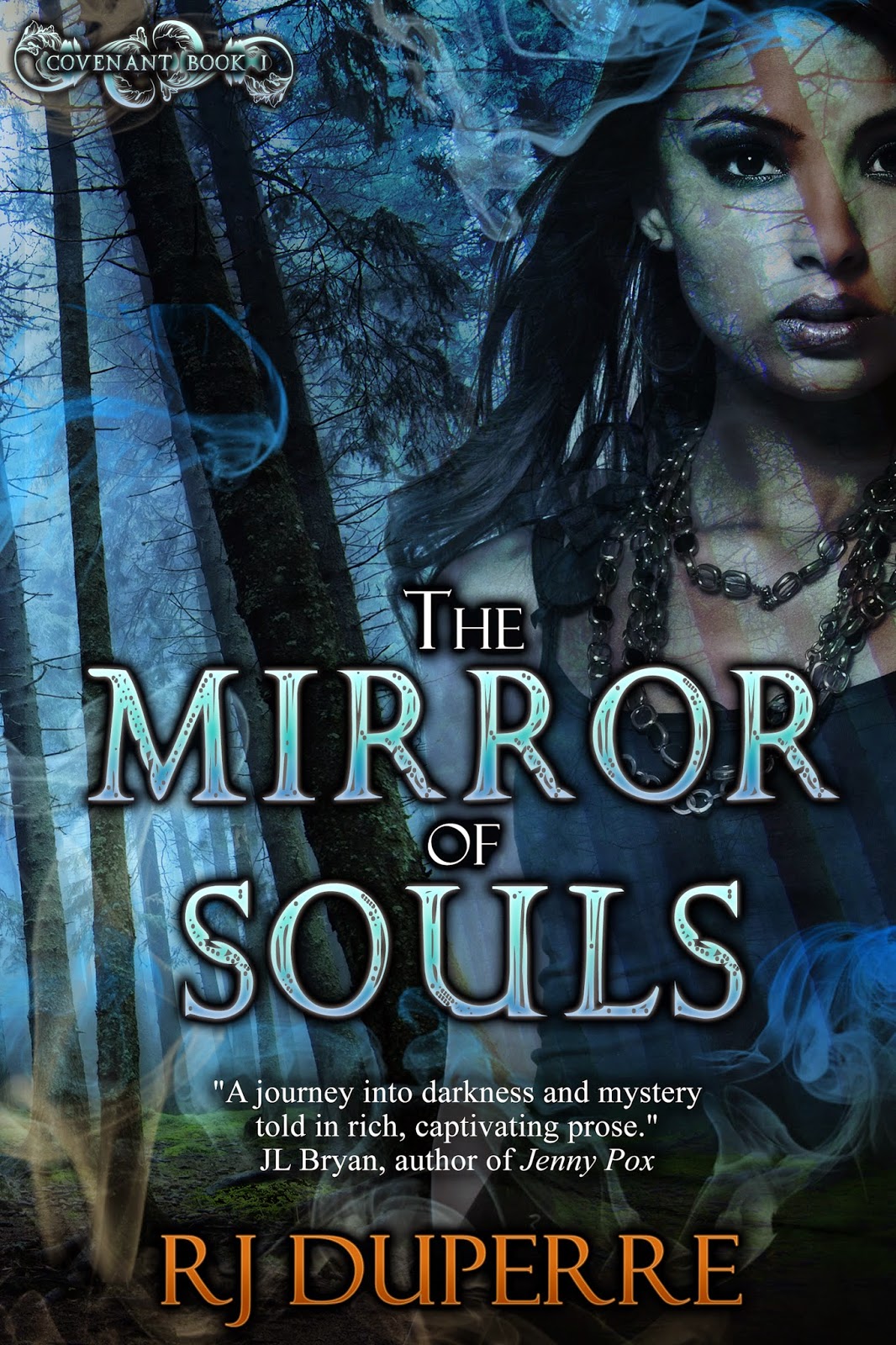
That's right, folks. The first book in the Covenant series, The Mirror of Souls, is soon to be published. For the first time ever, here's the cover:

http://www.amazon.com/Mirror-Souls-Covenant-Book-ebook/dp/B00R9PCV7Y

Product description:

Fifteen-year-old Jacqueline Talbot’s boyfriend Mal lives in the mirror of her makeup case. But then there’s never been anything normal about Jacqueline, nor it seems her new hometown of Mercy Hills.

With rumors of actual monsters in the woods, the popular kids taking an unhealthy interest in her, and the revealing of her own dark past, all Jacqueline wants to do is run away forever with Mal. Too bad he’s trapped in the mirror.

But when she learns the ancient forces of the town want to destroy everything she loves, the race is on to free the boy in the mirror, because he just might be the only one who knows how to stop them.


---------------------------------------------------------------------------

The book is currently on pre-order over at Amazon, and I plan on making it available across most platforms come its January 22nd release. This book (and series) is Young Adult with a horror slant. It'll be my first solo new release in over two years, and I'm quite excited about it. (Writing all those books with David Dalglish sure took a lot out of me!) Currently, I'm working on the 2nd book (The Chalice of Desire), with a tentative publication date at the end of April.

In the meantime, there will be another announcement coming in the next few weeks to add even further excitement! I will also be posting the prologue to The Mirror of Souls shortly. So until then, read a good book, dammit! Preferably one of mine!

THE MIRROR OF SOULS PRE-ORDER (CLICK TO PURCHASE)


Tuesday, February 25, 2014

All about me!

Would you look at that. I haven’t posted anything to this blog in over a year. To think I used to post three or four times a week. And almost none of them were about myself. Madness!

Well, to keep with the theme, I guess I have to write about myself again. A lot of stuff has gone on since I announced the sale of The Breaking World to 47North, and I should really get all those who’re interested updated.

First off, all three books in the initial run of the fantasy series Dave and I wrote are now complete. Dawn of Swords was published in January, while Wrath of Lions is set to be released on April 22nd. Add to that the fact that Blood of Gods is perilously close to being sent to copyediting, and you can tell how busy of a year it’s been for me. That’s 620,000 words of fiction written in 15 months. Something I never thought would be accomplished, has been. And I couldn’t be happier.

In other news (and this should’ve been posted a long while back), over the course of two months, from August until October of this past year (and while writing the rough draft of Wrath of Lions), I went through and did a complete re-edit of the entire Rift series. That was something I’ve been pining to do for a very long time. There were just certain things about the series that wore on me, from typos to style to an ending that I (and a number of reader) felt was rushed. So I dove in and made over three thousand corrections, as well as added an extra 10,000 words, most of which come at the book’s climax. Hopefully, the added material will make the final battle feel much more real, and add some much-needed closure for characters that had been unfairly ignored by me. Personally, I think it enhances the story greatly.

As it stands, the revised version of The Rift is only available in the four-book omnibus. For now, the individual books remain the same as they were when they were originally published, though only available in e-book format. The print version of the series is now offered in two separate volumes. Also, unlike when I first put the omnibus together last year, the digital version contains all of Jesse’s awesome artwork. Yay for progress!

Oh, and now The Fall e-book is permanently available for free, so there's that as well.

So we have the Breaking World books and The Rift news. To add to that, there’s a short story I wrote coming down the pike any day now. The story’s called Silence, and it will be included in Shock Totem issue 8.5, which is a collection of love stories told with a horror slant. The story I submitted might be my favorite ever, so I can’t wait for the day that gets released. Oh, and there’s also another short I’m writing for an invite-only anthology called My Peculiar Family. The story’s not finished yet, but it will be in the next day or so, and it’ll be another good one when it is. Thanks, Kristi, for inviting me! That anthology should see the light of day sometime at the end of the summer of 2014.

All of which begs the question: where is Rob going from here? Well, Dave and I still have three more books to write together—Kings of Ruin, Prince of Beasts, and Queen of Lies—in order to finish off our tale of Dezrel’s beginnings. To be honest, after writing the first three books in that series so damn quickly, we’re both suffering from a bit of burnout, so we’re going to put off starting those for a little bit. In the meantime, I’m going to go ahead and write the rough draft of The Mirror of Souls, which was placed on the backburner when the opportunity to work with Dave came about. That story’s all I’ve been able to think about for a couple weeks now, and I can’t wait to dive in. Jacqueline Talbot is calling out to me, folks. Tell my story, she says, and rather creepily at that. I’m getting the shivers just thinking about it!

However, just because I’m writing that book doesn’t mean it’s going to be released anytime soon. I’m still not sure what I’m going to do with it. I haven’t decided if I want to self-publish or find a home with an actual publisher (if that’s even an option). Another thing to take into consideration is books 4-6 of The Breaking World. Should the pressure mount to dive into that world once more, that’s something I’ll have to do. If that happens, any public sighting of Jacqueline’s first solo effort would be delayed indefinitely. While I do plan on having the rough draft finished by the end of April, I couldn’t justify putting out a single tome of a four-book series, only to let the readers sway in the wind for a year or two. Nope, not gonna happen.

In other words, everything’s still up in the air. All I do know is that I have two short stories and two more books coming out in the next eight months. And that, in and of itself, is something to be excited about.

Thanks for stopping by and listening, and hopefully I can start keeping this blog a little more active than it’s been.

But no promises. :-)

Rob D

Friday, March 1, 2013

Announcing "The Breaking World"

First of all, I would like to take this moment to announce the big news of the day. My good friend David Dalglish and I have signed a publishing deal with 47North, an arm of Amazon Publishing. The deal is for three books, all co-written by Dave and myself. The series will be titled The Breaking World, and will chronicle the birth of humanity upon Dezrel, the world in which all of Dave’s many, many novels take place, and the war between the two brother gods around whom a great number of his plots center. To say we’re both quite excited about this would be an understatement. For information’s sake, the books will be as follows:
  
Dawn of Swords (sometime in January, 2014)
Wrath of Lions (TBA)
Blood of Gods (TBA)

It really is quite fitting that I post the announcement on this particular blog, which has gone criminally underused for the past year. Because it was in this very space that the groundwork for the friendship that would eventually result in a rewarding collaboration was laid.
  
Three years ago, after much frustration, I decided to take the plunge and begin self-publishing The Rift, a series of post-apocalyptic novels I’d been working on for years. I entered the Kindle publishing world, which had just begun to make headway and gain a name for itself. Reviews were difficult to come by, as I was one of thousands to take the plunge at about the same time. I saw many of my brethren having the same difficulties, and so I dusted off this blog, which had been languishing for some time, and decided that I would pitch my services as a reviewer to the countless self-pubbers who frequented a site called Kindleboards. A great many authors added their names to the list, and my side career as an amateur reviewer began.

This is where Dave Dalglish enters the picture...but first, a bit of background. As far as being a reader goes, I’m really not as well read in genre fiction as a lot of folks out there. I dabbled in the classics a lot when I was younger, but as I grew older, I ended up limiting my reading material to pretty much horror and horror only. In fact, as far as genres go, the one I pretty much ignored was fantasy. I hadn’t read a book featuring swords and sorcery since I picked up RA Salvatore’s The Crystal Shard back in high school. (Which, trust me, was a long time ago.) That was about to change.

So on this list of books to be read and reviewed appeared The Weight of Blood, a dark journey starring a couple disenfranchised half-orc brothers written by a lithe redhead named David Dalglish. I absolutely fell in love with the book. Was it perfect? No, of course not. However, there was so much there, deep stuff, philosophical stuff that I just couldn’t overlook, whether Dave intended them or not. It was the second work of fantasy I’d read since starting the reviews, and I was hooked. A new love affair had begun.

Every book Dave wrote, I devoured. (In fact, The Cost of Betrayal, the second Half-Orc book, I still consider to be one of my favorites ever, in any genre.) We began chatting online, and a friendship was struck. During his later books, he would call me to discuss plot ideas, and I’d like to think that I was able to be of some help. I became enraptured by his world, almost to a scholarly level. So immersed was I that I began to understand Dezrel and what happened within it as much as I understood what was happening in my own writing.
 
One thing that always intrigued me was the Gods’ War, which many of his books reference. I’d often ask him if he was ever going to write it, and he said he had no plans to. (In the interview linked at the bottom of this post, Dave himself describes his feelings on the subject.) I thought that was a shame, as the storyline had so much potential, but at the same time a writer’s gotta do what a writer’s gotta do. If he didn’t feel inspired by the material, best not to pen it or you’ll come out with a substandard product.
 
Fast forward to 2012, when I was putting the finishing touches on The Summer Son, the last of the Rift books. Dave asked me what project I planned on doing next, and I told him I was wavering between ideas at the moment. “Why don’t you write the prequel books with me,” he then said. “You know, the war between Ashhur and Karak.”

I just about fell out of my chair.
 
Full disclosure here: For a long while, I had actually hoped this offer would be made. During my many hours spent reading Dave’s novels, I’d developed a mental picture (and even quite a few written notes) of what life would be like in early Dezrel, hashed out a few storylines that needed telling, and stashed them away as maybe something to give my friend if he ever decided to start the project, or, gasp, maybe wanted me to help write them. And then there it was, falling right into my lap—the opportunity to not only write in a world I loved, but write with a man I admire and who has come to become one of my closest of friends, one with whom I share a great deal of values and beliefs, though we come from vastly different backgrounds. Not only that, but I knew we would work well together, since probably the best short story I ever wrote, The One that Matters, which appeared in his Land of Ash compilation, was a tale I had no confidence in until Dave cleaned it up, removed unnecessary filler, and helped make it what it became. That’s when I knew that the two of us working together could create something great.

I had an outline ready for him almost immediately (an easy task given my previous note-taking), and after his enthusiastic approval, it was off to the races. I worked on the rough draft, constantly calling Dave to keep the storyline consistent and fix quite a few aspects of the plot that I couldn’t find resolutions to. Then, when the hulking manuscript was finished, Dave took it and began a round of heavy edits. What ended up coming out when all was said and done is a book that is far and away the best piece of literature I’ve ever had my name attached to. See, that’s the thing with this collaboration; areas I struggle in Dave is expert at, and visa versa. Balance, people. Celestia would be quite proud. (Anyone who knows Dave’s work will appreciate that statement.)
 
And in the middle of all this, something wondrous happened. Dave got out of a bad representation deal and, all of a sudden, he had a deal with big-six publisher Orbit for his Shadowdance novels and our collaboration was going to have Amazon’s mighty sword behind it. A book that had been a labor of love, that had been slated to be self-published, was now going to find a home with a real, live publisher. Now, I will freely admit that just having Dave’s name on a project pretty much guarantees it success (and I lucked out greatly there), but this was beyond my wildest dreams. I even got hooked up with uber-agent Michael Carr because of this, one of the nicest and hardest-working men I’ve ever come across, who obviously deserves a great amount of credit for these deals being completed.
So there you have it. Really, though I put a ton of work into the project, it’s Dave who deserves the lion’s share of praise here. He was the one who believed in what I had to offer, his rewriting skills were on-point, and hell, he was the one who created this whole wonderful backdrop in the first place! Without Dave Dalglish, there’s no Dezrel, there’s no Half-Orcs, there’s no Shadowdance, and there sure as hell isn’t any Breaking World. I owe him so much, not the least of which is being a great friend when I needed one most.

So thanks, Dave! Not like you don’t know this already, but you’re the greatest, as a man as well as an author. And thanks to 47North as well, for taking a chance on these books. We’re going to do awesome things together, I guarantee it.

To read a fascinating interview with Dave on this subject and a whole lot more, visit the following link: http://davidgaughran.wordpress.com/2013/02/28/from-pizza-hut-to-easy-street-the-david-dalglish-story/

Thursday, February 16, 2012

Review: The Old Ways (Paladins III) by David Dalglish

Rating: 5 out of 5


No one’s perfect, but sometimes everything comes together, especially in literature. It’s fascinating to watch an author grow and grow, slowly improving over time, fixing faults in their writing, finding new ways to explore tired old plot devices, coming to grips with their weaknesses and making them strengths. It’s not all that rare in the world of books, but it’s still special.


And this brings us to The Old Ways: Paladins Book III by David Dalglish.


I, for one, am a huge fan of the author’s work. (Surprised? Look through my archived reviews and you won’t be.) I’ve read every book Dalglish has come out with, and either loved or really liked every one. But this one is something special. Gone is his penchant for rushing, for occasionally taking the easy way out and brushing aside important internal conflict. Instead, what the author has given us in this book is a pace that moves slowly, fluidly, that gradually builds the tension and grows the characters until they explode off the page in the last act.


The Old Ways continues with the struggles of Jericho, paladin of Ashhur, and Darius, former paladin of Karak. The story picks up where we left off in Clash of Faiths, with Darius being converted to the side of light in his trial-by-fire (and unnecessarily rushed) clash with his old friend. He’s a man isolated even when he’s surrounded by people. He’s haunted by his past deeds, both inwardly and outwardly, and the fact that many of those past deeds hurt a great many people does nothing but make life much more difficult for our poor antihero.


But he’s learning, changing, determined to become a better man, even if it kills him.


On the other side of the coin we have Jericho, the sometimes too-good-to-be-true goodie-goodie. While I loved his character when he first appeared in Half-Orcs, truth be told he can be a bit one-note with how honorable and loyal he is. But then again, his purpose in this story is to act as foil for Darius, for Darius is the true star of the show, the character that grows and experiences pain and redemption and acts like a living, breathing human being. He is the backbone of this novel—the backbone of the series, really—and in this book he really shines.


Along with Darius’s redemption, Dalglish also pushes the envelope with his new cadre of villains. We have Valessa, the Grey Sister who died in Faiths, only to be reborn as something dark and complex, a being of shadow that cannot rest until her mission (killing Darius) is accomplished. The scenes involving her were brilliantly done, full of contradiction, self-loathing, and doubt. If there’s one character that I hope future books explore deeper, it’s her.


Then we have Luther and Cyric, priests of Karak who start up the journey toward changing the world to fit their god’s image. The complexity of each character is fantastic. They’re literary interpretations of different ways of obtaining political power—subterfuge cunning, and force and tradition. Both are effective in their own ways, and to watch their respective plans unfold on the page was awe-inspiring. Especially with Luther, who offers a surprise at the end that literally left me speechless.


So yes, I can say that David Dalglish has done it again. He’s written a book full of trepidation and turmoil, full of violence and self-discovery, a book that I fully ingested with aplomb. I may not be someone you really want to listen to in regards to my opinion on this book, since I’m a little more than biased toward him, but in my humble opinion he has created a work that goes far beyond simply being a third book in a series.


And that’s because The Old Ways, while not perfect, is just about as close as any writer can get to that unreachable ideal.


Purchase The Old Ways in Ebook format:


Wednesday, January 11, 2012

Top 15 Books of 2011

Well, I'm a tad bit late to the game here, but better late then never, right?

Once again, I looked over a great deal of outstanding fiction over the past year, and here are my top 15 (well, sort of 16) in ascending order.

(Disclaimer: All of this is according to me, of course. Obviously there are many books I haven't read.)

#15 - Spirit Storm by E.J. Stevens (4.5) - Lighthearted but meaningful, the second book in Stevens's Spirit Guide series came this close to being much higher on the list.

#14 - The Stasis: Powerless book 3 by Jason Letts (4.6) - The best book of the Powerless series, full of despair and dark emotion.

#13 - The Miracle Inspector by Helen Smith (4.7) - A fantastic literary exploration of dystopian Britain. Darkly comedic and unsettling.

#12 - Draculas by Blake Crouch, Joe Konrath, Jeff Strand, and F. Paul Wilson (4.7) - Quite simply, this was hilariously gory fun.

#11 - Anomaly by Thea Atkinson (4.7) - Heartwarming and disturbing at the same time, a fascinating (not to mention revealing) look at addiction and the nature of sexuality.

#10 - Freeze by Daniel Pyle (4.8) - A short, powerful story that left me breathless.

#9 - The Gods of Dream by Daniel Arenson (4.8) - This hallucinatory look at the world of our sleep is meaningful and full of wonderful description.

#8 - The Ryel Saga by Carolyn Kephart (4.9) - A work of epic fantasy that is almost poetic in its prose and pace.

#7 - Jenny Pox by J.L. Bryan (4.9) - In the first book of his Paranormals series, author Bryan creates a work that very much stands up to the likes of Carrie and Weaveworld.

#6 - A Dance of Death and A Dance of Blades by David Dalglish (5.0) - Okay, so I'm cheating a little, but since these two books are the 3rd and 2nd in a trilogy, and are both now available in an omnibus, I figured I'd combine them here. Let's just say that Dalglish's Shadowdance books are so well-written and plotted that he'll have a hard time topping them in the future.

#5 - Dismember by Daniel Pyle (5.0) - A truly compelling journey of horror into the broken mind of a man who only wants his family back.

#4 - Cadman's Gambit (Shader Book I) by D.P. Prior (5.0) - With a compelling mix of science fiction and hard-boiled fantasy, this book captured me from the first sentence and wouldn't let me go.

#3 - The Infection by Craig DiLouie (5.0) - I'm a sucker for zombie fiction, and let's just say that DiLouie's opus is a new take on the end of the world and just about as good as it gets.

#2 - A Sliver of Redemption by David Dalglish (5.0) - Sure, his later series may be tighter and more refined, but as far as emotion goes—and I'm a sucker for emotional threads—Dalglish has never been better than in the final novel of his Half-Orcs series.

And finally...

drumroll

#1 - Burying Brian by Steven Pirie (5.0)

My favorite author over the last 20 years doesn't disappoint with his follow-up to Digging Up Donald. It's a hilarious and poignant journey of one inept man's attempt to save humankind, and heaven, from themselves.

And that's it, folks! Here's to a great 2012, to great books and great writers, so go out there and read!

Wednesday, November 16, 2011

Review: A Dance of Death (Shadowdance Book III) by David Dalglish

Rating: 5 out of 5


I love David Dalglish’s books. There, I said it. Everything he’s put out I’ve devoured and raved about. From Weight of Blood, the introduction to his Half-Orcs series, to his new Paladins adventures, each story builds upon the next, further enhancing and enriching the world he’s created and presenting new conspiracies, enemies, and themes.


Now we come to A Dance of Death, the climactic work of the Shadowdance series – which, strangely enough, are really stand-alone novels masquerading as a series. And I will now say, as I seem to after virtually every Dalglish book, that he’s once more raised the bar, making this reviewer swoon, sway, and cheer with each swing of the sword (or thrust of the dagger).


This time around, we find Haern, fully entrenched in his role as King’s Watcher, being led out of Velderan by a copycat killer in the town of Angelport, miles away from home. This mimic kills seemingly indiscriminately, leaving behind Haern’s old calling card, the bloody, traced eye, one he hasn’t used in years.


Haern, along with Alyssa and Zusa, head south. There are other bad things going on in Angelport – a fight with the elves over the woodlands, the proliferation of a new, powerful drug that is spreading through the streets, and the infighting between the merchant lords, who own the boats, and the lord of the land, who is slowly losing control of everything. Into this mix is thrown the Wraith, Haern’s much-too-talented, unwanted protégé, which pitches everything into a great big smorgasbord of murder, conspiracy, deceit, and political intrigue that brings the city to the brink of war – both with the elves and amongst themselves.


For the first time, Dalglish introduces a plot that is truly mysterious and isn’t concluded until the very end. While all of his books possess tremendous character development – and are usually carried by it – this one actually uses the plot itself, the mystery, to drive the story forward, using the previously stated character development to enhance the story, making the characters come to even more life than they already are. We understand Alyssa’s doubt, Zusa’s anger, Haern’s guilt, because each step of the way we’re shown why they feel what they’re feeling.


And they aren’t the only characters spotlighted here. We’re also reintroduced to Torgar, from way back in book one, who serves as the master of the guard for the Keenans, the Trifect members who reside in Angelport. We also get further insight into Madelyn Keenan’s character, who, let’s just say, is one of my favorites in the whole book, maybe the whole series. We also get inside the head of the Wraith, this mirror of a creation whose goals and actions don’t quite match up.


This is a book filled – and I mean filled – with meaning and thematic exploration. Everything from drug trafficking to environmental preservation to the question of how far is too far when it comes to the use of violence in making the world a better place are explored. Haern, for his part, is left to question his own motivations, to doubt his every action. He’s presented with a man much like himself, one that kills ostensibly at random, with no thought given to whether his victims deserve their fate or not. All of which leads Haern to wonder, what makes me so much better than him?


Because of this fact, there are no true heroes in A Dance of Death. What we cheer for when we read are incomplete people – in other words, fantasy representations of actual, real people experiencing the type of trauma – gang violence, drug dealers, vigilantism – that are found in any city across the world. All of which makes me repeat something I’ve said many times before: David Dalglish is not a fantasy author. He’s an author, period; one whose words would mean just as much if they were set in Chicago or Paris or Los Angeles as they do in Velderan…or Angelport.


The bottom line is this: A Dance of Death is a great, great read, a much more than worthy offering to close out a fantastic series. The characters are great, the story even better, and it has enough twists to make your head spin. We even get to see elves portrayed being not-so-elflike – you know wise and mystical and peaceful and all that – which I absolutely loved. There is heartbreak and anger, betrayal and gut-wrenching decisions, as well as some rather inspired deaths. I heartily recommend it, as I would all of the author’s books, and can honestly say I hope he gives us more of Haern’s story in the future, because there has to be more to tell.


Yeah, this is pretty much the perfect novel. You won’t be disappointed. And if you are, that’s on you, not the work.


If you want to read this fantastic work for yourself, buy them in Ebook format at the following sellers:


Friday, August 26, 2011

Review: Clash of Faiths by David Dalglish

Rating: 4.6 out of 5


David Dalglish writes what I want to read. He’s listed as a fantasy author, and his books take place in a world that includes magic, orcs, wolf-men, paladins, knights, and ancient gods, but that’s only the surface of what’s happening. I look at Dalglish’s work like this – whimsical explorations of modern-day themes and issues that both entertain and force the reader to examine what goes on in the real world around them.


Clash of Faiths, the second book in his Paladins series, is no different. It continues the story of Jerico and Darius, the paladins of Ashhur and Karak, respectively, and their struggles in the time after the attempted wolf-man invasion of Durham. Jerico finds himself up north, prisoner of a man named Kaide, who is heading up a people’s rebellion against the brutal Lord Hemman. It might not be the best of situations to be in, but at least he’s hidden from the legions of Karak who are hunting him, those who’ve recently destroyed the Citadel, leaving Jerico as possibly the last of his kind. All the while Darius is stumbling about all by his lonesome, getting into trouble and being an overall grouchypants after his run-in with Velixar, Karak’s prophet. And Velixar isn’t done with him…not in the slightest. It is the Big V’s principal goal to lead Darius back to his faith – or the Dark Side, if you will.


The story plays out in equally distributed parts, flipping from Jerico to Darius and back again, paralleling their respective struggles and demonstrating just the types of people these two faithful men are. Jerico joins forces with Kaide (who is actually one of my favorite characters Dalglish has ever created; a living, breathing, gray area of a concept) against Lord Sebastian Hemman, while Darius ends up being thrown in prison by said Lord, for the sin of not being faithful enough to Karak’s cause, even though Darius is constantly professing his love of the deity…and believing every word of it. It is there, while in prison, that Velixar comes to him once again, therefore setting the stage for the rest of the tale to play out.


The story climaxes in a final battle between Hemman’s men and Kaide’s army of farmers and merchants. Unlike most episodes of warfare in Dalglish’s novels, this one is brisk, taking up only perhaps a tenth of the text. Why is that? Because the fighting, while intriguing, isn’t the point of the book. It only serves as a metaphor for the war raging inside Darius’s head – can he love his friend even after all he’s been through, what constitutes righteousness in a faith that preaches order and conquest above adoration, and which system of belief is right, which is wrong, and does it even matter if he chooses one over the other?


This is what makes Dalglish’s books so special to me – those posed questions. And finally, we have the order of Karak shown to be what I’ve long suspected it is – a religious cult that uses suppression and mind control to grow its following. One might ask, but why would someone willingly join a cult like that? The answer is quite simple, given the context of the world it exists in: there is safety in power, in influence, and Karak offers that. The deity promises protection (and a lack of decapitation) to those who follow, while those who don’t are doomed to a lifetime of pain and flight from an aggressive enemy. Add to that the fact that the concepts of order and self-control are the tenets of the faith, and one could understand how an individual who feels unstable could look at the order as a way to heal the fractured parts within them. There are many similar cults, such as Scientology, in the world today that do much of the same. They rely on coercion and peoples’ inherent insecurities to draw them in, promising solutions to the ills of their lives, and then instill the members with an us-against-the-world mentality. If you’re not for us, you’re against us, to the extreme. It is these elements that make Dalglish’s books that much more important, not to mention insightful, than many other works of fiction.


To counterbalance Karak’s aggressive, neo-fascist nature, we have followers of Ashhur, the passive, loving god. When I first started reading these novels, I always took Ashhur to be a representation of Christianity – which I’m sure the author intended. However, the more I read, the more I realize that this is not entirely the case. In fact, you can look at it like this: Ashhur’s teachings are the manifestation of all that is good in spiritual belief; the care for others, the virtue of forgiveness, the living of life with the sole aim of being the best individual you can be. It’s an inclusive system of belief, one in which all people, even those who don’t believe, are treated as equals. Unlike the history of Christianity, Ashhur’s followers don’t actively seek to convert the people, only to show how much they care, saying that if you ever need a place to stay, a steadying hand to lead the way, someone to heal your sore and tired bones, we’ll be here with no strings attached. In other words, everyone has a chance at salvation, whether they buy into the dogma or not. And Jerico embodies this. He treats every person he meets with the same amount of respect until they prove a danger. This is also the reason why Darius has a very difficult time understanding his friend’s actions: to the dark paladin, existence is a series of trials, of sacrifices, both mentally and physically, to a demanding god. The mere concept of something like forgiveness, or even pity, are lost on him, at least on the surface. But once he dives a little deeper, he has the potential to learn that not only is he capable of changing, of becoming something other than the stormtrooper of death he is, but all people are. And that, my friends, is a beautiful thing.


I’ve gone on a bit of a tangent here, and I’m sure this sounds more like a term paper than a review, but I felt this book deserved to be broken down in this way. Every word written down means something ­– each line of dialogue, each description, each instance of cruelty or kindness. That being said, the only thing I didn’t like about Clash of Faiths was the very end of the book. After so much flowing prose and inner turmoil, it seemed that suddenly everything happens too quickly, especially Darius’s character development. I would’ve liked some more exposition, more scenes of him questioning his faith and coming to grips with the possibility that what he’s always believed may be a lie. But that didn’t happen, and in a way that’s a shame. Darius and Jerico, and their relationship as brothers-in-spirit, deserved it.


That being said, this is still a wonderful book. It more than adds to the canon of David Dalglish’s work – it creates a template for the beliefs of the world that I’m sure will be carried on in volumes to come. The scenes that built upon what we already know about the characters were wonderful. And Velixar? Let’s just say he’s deliciously evil, and whenever he appears on the page, that scene becomes his. Also, one thing the ending did get right was introduce us to a new, potentially lethal villain, one that I’m sure will appear in the next book and wreck all sorts of ungodly havoc. Just that has me excited to continue.


In closing, Clash of Faiths is well worth a read, for both fans of Dalglish and those new to his work. It’s filled with important questions and shrewd observations of the world at large, and it is an improvement on the previous book in the series. I seriously can’t give the author any more props than to say I’m a fan for life, that everything he does strikes me where it counts, and it is always a joy to read what he puts on paper. To me he is the best fantasy author of his generation, the Stephen King of the sword-and-sorcery genre who transcends the normal tropes, and even when there are things I think can be improved, what he puts out there is second to absolutely no one.


Seriously.


Plot – 10

Characters - 10

Voice - 10

Execution - 7

Personal Enjoyment – 9


Overall – 46/50 (4.6/5)


Purchase Clash of Faiths: The Paladins 2 in Ebook format:


Saturday, July 9, 2011

Review: A Dance of Blades by David Dalglish

Rating: 5 out of 5


Sequels are tough business, especially when the first book of a series is extremely well written. There’s a ton of pressure to put out something equally as good, and there’s a good chance readers could walk away disappointed because the author wasn’t up to the challenge.


After reading A Dance of Blades by David Dalglish, the sequel to last year’s A Dance of Cloaks, I can tell you with all certainty that this particular writer accomplished just what he set out to do.


Blades starts out five years after the end of Cloaks. Early on we find Aaron Felhorn, the son of Spider Guild leader Thren who now calls himself only Haern, living on the streets and waging his own personal war of attrition against the thief guilds of Velderan. Gone is that sliver of innocence that Haern tried so hard to hold onto in the first book, replaced by an undying need for vengeance against the man who sullied his life. And when I say need, what I really mean is obsession, because that’s truly what it is. Haern hates his father and all those like him so much that he cannot help but paint every thief he runs across with the same blood-drenched brush.


As for those thief guilds and their never-ending battle with the Trifect, the powers-that-be in the land, all is not going so well. It seemed the aftereffects of the Bloody Kensgold, where Thren tried to wrest power away from the businessmen, has left all parties worse for wear. The guilds are in shambles, shamelessly murdering and stealing from any they wish, while the Trifect, themselves, are struggling. Alyssa Gemcroft, now the leader of the Gemcroft estate after the assassination of her father, is particularly stressed. She’s sent her son Nathanial to the north for protection while she constantly wards herself from poisoned food and the fortune her family has lost to the thieves that surround them at all times.


The thing she most needs, at least according to her advisors, is a husband. She eventually acquiesces after Nathanial is killed, apparently by the Watcher (Haern), which introduces us to the main villain of the piece, Arthur Hadfield.


Hadfield is a very strange baddie, at least when it comes to Dalglish’s work. He’s in no way supernatural, he has no otherworldly power or strength, and isn’t the face of some great and secret organization. All he is, is an opportunistic scoundrel who wants nothing but more power. That might make him the weakest of Dalglish’s villains to some, but to me, he’s the best because he’s so real. Arthur’s like a crooked politician with no moral compass, and he attracts like-minded men to his side, such as his right-hand-man Oric. Let’s just say I hated both these characters with a passion, their deeds and thoughts (or lack thereof), and that made me love them…if that makes any sense.


As for Alyssa, she’s come a long way from where we saw her in the first book. She’s a strong woman now, leading her people and doing just what leaders are supposed to do – making the tough decisions, even if they turn out to be wrong. After she discovers her son has been killed, she takes it upon herself to personally dispatch every criminal in the entire city, and hires countless mercenaries to carry out her request. What follows are a series of hellish nights as the streets of Velderan are filled with blood.


Let me say this right now – Alyssa Gemcroft very well may be the most brilliant character Dalglish has ever created…and I don’t say that lightly. She bucks trends and stereotypes and displays power and weakness in equal measure. Throughout the entire book, there is never once a mention of her beauty – it’s simply assumed that she is. As a character she is so well conceived that she almost overshadows the other particulars in this tale of deceit, violence, and woe.


Almost, but not quite.


There are characters aplenty to care about in this novel, just as in the first. We get to see the coming to power of Deathmask (who appeared in the last couple Half-Orc books), and he gobbles up every scene he appears in. We are also reacquainted with Veliana, the lady-behind-the-curtain of the Ash Guild, and Zusa, the mysterious, cloth-wrapped woman who assists both Alyssa and Vel from her place in the shadows (yet two more imminently strong female characters…I have a feeling Dalglish is trying to get to something about women banding together being more powerful than any force in the universe). Also, as readers we get to meet the Eschaton once more, Tarlak and Delysia and Brug, along with Senke, Haern’s former mentor. For those who’ve followed this author’s work, it’s a wonderful homecoming of sorts; to those who haven’t they are introduced to some pretty entertaining personalities that have been sorely missed.


But of course, with all this being said, A Dance of Blades is Haern’s show, and he doesn’t disappoint. We get to see him evolve as a person throughout the length of the novel, from angry outcast to bitter vigilante to, finally, an accepting adult who comes to understand his role in the world. I think, during parts of the book, I forgot a very important part of Haern’s makeup – he’s still a child. He’s at most eighteen years old, and as a father of a son near that age, I can honestly say that none of them have anything figured out. Life is a big, confusing, sometimes hellacious ball of experience, and it takes time to come to grips with that…especially without an elder guide, which is why I found Haern’s progress as an individual to be so profound. Though he does develop friendships by the end, most every decision he makes, he makes on his own, with very little input from others. This shows the strength of character we see when he appears in Dalglish’s earlier novels, and also demonstrates just how capable of righteousness in the face of cruelty he can be.


As the second book in a series, A Dance of Blades loses some of the innocence from the first installment, as I mentioned earlier. However, it more than makes up for that with the amount of brutality and self-sacrifice that is demonstrated within. The three-night battle between the mercenaries and thief guilds is atrocious, and there is very little care for who’s guilty or innocent. There is also one particular scene that turned my stomach, as a kind family is cruelly assaulted by Oric and some more of Arthur Hadfield’s men. Though Dalglish handles the visuals and presentation respectfully, we still get to witness the horror of these actions, and imagine the repercussions for the victims. So when you add all this in together with Haern’s mad fixation on killing every thief he can get his hands on, I guess you can say that this is a book about the loss of innocence…or a fall from grace, if you will.


Which is important in any work of fiction, because of course you have to fall before you can get back up.


In all, A Dance of Blades is a more than worthy compliment to its predecessor. In most ways it even surpasses the first book, which I didn’t think possible. It’s a novel full of treachery, disturbing images, underhanded dealings, war, and desperation, but it also shows the reader how, even in these trying times, there is still a capacity for love and friendship in the world. It says we don’t have to be alone, even if we’ve become monsters to ourselves, because no one worth a salt is ever beyond redemption.


With that, I can honestly say that this is the second-best book Dalglish has ever written, just a fraction of a percentage point behind A Sliver of Redemption. Who knows, perhaps when the final book of the Shadowdance trilogy comes out next winter, he might outshine himself again.


Knowing this author’s work the way I do, I wouldn’t put it past him in the slightest.


Plot - 10

Characters - 10

Voice - 10

Execution - 10

Personal Enjoyment – 10


Overall – 50/50 (5.0/5)


Purchase A Dance of Blades in ebook format:


Wednesday, June 29, 2011

Review: Night of Wolves by David Dalglish

Rating: 4.6 out of 5


What does friendship mean?


Is it sticking up for your cohorts in time of need? Is it putting aside differences and trying to find a common ground? Is it a solemn smile or a firm slap across the face when the other starts to stray? Is it setting aside your own fears and convictions, even though everything about you says to get away, because deep down you just trust this person, for better or worse?


These are the questions David Dalglish asks in Night of Wolves, the first book in his new Paladins series.

With this series, it seems Dalglish is going down a Memento path when it comes to his characters’ stories – aka going backward. This particular book is the tale of Jerico, the paladin of Ashhur we first met (and fell in love with) in The Death of Promises. Wolves takes a few years before the events in the Half-Orc series, and introduces a major plot point that those who’ve digested Dalglish’s work might find unbelievable.


A friendship between paladins of the two polar gods, Ashhur and Karak.


Jerico, it seems, has befriended a young man named Darius while both are stationed in the farming town of Durham, preaching the messages of their particular religions. Theirs is a relationship built upon mutual respect – they learn from each other, protect each other, help each other grow…the gods be damned. And when the wolf-men from the Vile Wedge start crossing the river, threatening the lives of the townsfolk, they must work together even more so than before, which causes just a few moral dilemmas within each of them. But work together they do, because they both realize that without their combined strength, the good men and women of Durham don’t stand a chance.


There are interesting threads all around in this book, such as a new leader rising to lead the pack of wolf-men: Redclaw, a powerful foe with the desire to pull a Moses, bringing his people out of the dead landscape of the Wedge to enter the lush, bountiful forests that lie just out of their reach. There is also the fall of the Citadel, which occurs from afar, the repercussions of which are hinted at, and are haunting. Finally, there is the concluding battle, as the wolf-men gather together and assault the human forces in what is a greatly realized battle sequence.


But none of these threads can compare with Jerico and Darius. They steal the show, and as often happens in Dalglish’s novels, their quiet scenes together are magical. These are two men who grow to love each other over the course of the book, and that brotherly bond is something beautiful to behold. As usual, the author’s asking a philosophical question that not many others do – in this case, can we ever shove the veil of faith out of the way and see our brothers and sisters for what they truly are: fellow human beings, just as deserving of love as any other.


There are many surprisingly tender moments to be seen, and these aspects are what I appreciate the most. On the bad side, some of the battle scenes early on are ho-hum, to the point where I had to fight the desire to skim and turn the page, saying, “Just give me more Jerico and Darius, dammit!” However, I can’t decide if that’s because they really are subpar, or if it’s because the interplay between those two characters is so brilliantly done that everything else seems unimportant. No matter, though, because as I said, Dalglish pulls it out in the end, and the attack (and defense) of Durham is truly a sight to behold, equaling (though not surpassing) those more tender moments


Reading Night of Wolves is a fantastic experience. It’s short and to the point, filled with just about everything I love about the author’s work. It’s dark yet filled with hope, brutal yet compassionate. The words he weaves captivates, pulling us in and making us care about these people. The story is chock-full of metaphor, of the questions of what moral belief is correct, if there’s a correct one at all. This is one point I’m not going to harp on in this review, however, for I’m sure I’ll have plenty of things to say on that very subject when the next book comes out in a couple months.


Once again, I fully recommend Night of Wolves. You’ll enjoy seeing friends and enemies, old and new, and be intrigued by just how the ungodly mess Jerico and Darius have gotten into will resolve itself. It’s an oddity: an edge-of-your-seat fantasy thrill ride and quiet literary piece all rolled into one.


You’d be hard pressed to come up with a better read.


Plot - 9

Characters - 10

Voice - 10

Execution - 8

Personal Enjoyment – 9


Overall – 46/50 (4.6/5)


Purchase Dance of Wolves in ebook format from:


Monday, June 6, 2011

BOOK RELEASE - Night of Wolves by David Dalglish

That's right folks: David Dalglish, author of the Half-Orc and Shadowdance series, has started yet another series, this one chronicling the trials and travails of the paladins, both dark and light, that appear in his other books. Here's a look at the first installment, Night of Wolves.


PRODUCT DESCRIPTION:

"The humans are weak. Their skin is soft, and their minds dull from years of safety. We are the vicious. We are the destroyers. Come the full moon, when our goddess watches our victory, we will taste of their blood!"

----

Wolf-men, savage creatures given humanoid form in an ancient war, mass along the Gihon River. Led by their packleader Redclaw, they seek to cross the river and claim a land of their own, slaughtering those that would stand in their way. Two paladins, Jerico of the god Ashhur, and Darius of the god Karak, must helm the desperate defense against the invasion. Their friendship will be tested as their gods resume an unending war, and their very faiths call for the death of the other. Together, friend or foe, they must face Redclaw's horde.

NIGHT OF WOLVES by David Dalglish
Can faith remain when the gods call for blood?

ABOUT THE AUTHOR:

David Dalglish currently lives in rural Missouri with his wife Samantha, daughter Morgan, and snake, Velixar. He graduated from Missouri Southern State University in 2006 with a degree in Mathematics and currently spends his free time watching Spongebob Squarepants with his daughter.

Night of Wolves is currently available in ebook format for the rock-bottom price of 99¢ at Amazon and Amazon UK.

Wednesday, April 20, 2011

Review: A Sliver of Redemption by David Dalglish


Rating: 5 out of 5


This is a special review, so let’s start things off with some reflection.


I first reviewed The Weight of Blood by David Dalglish in July of 2010. It was my first foray into fantasy in years, and I didn’t know what to expect. I walked away from the experience in a state of wonder. I didn’t know that a world populated by orcs, elves, and dark magicians could be so captivating, could mean so much. I immediately fell in love with the characters. I understood their background, their point of view, and found it to be, overall, a much more than solid (not to mention valiant) story.


From there I went on to The Cost of Betrayal, and if I hadn’t fallen in love with Dalglish’s unique voice before, by the time I reached the end of that second novel I was hooked. The emotion was palpable, the plot complex, and the message was clear.


This was a story with something to say, and it did so in spades.


The following two books, The Death of Promises and The Shadows of Grace, I plowed through. Though very well done in their own rite, they never quite reached the very high bar that Dalglish set with Betrayal. Not to say they weren’t fantastic stories – they were – but there was just something special about that second book, something that grabbed hold of me and took me down a path that made me care about these characters – their actions and contemplations, their failures and victories – more than any reader really should. By the time I wrote the review for Grace, I’d made up my mind that as talented a storyteller as David Dalglish is, there was no way in hell he could top what he’d achieved so long ago in a book that at the time I stated was one of the five best books I’ve ever read.


So here we are now, and I’m going to tell you that he has surpassed himself. The list has changed, folks, for the narrative that unfolds in A Sliver of Redemption, the fifth and final novel in the Half-Orc opus, is second to absolutely none, including that aforementioned special second book. Hence, it has replaced Betrayal on my list of great novels.


The story of Redemption begins, as always, with the resolution of the cliffhanger from book four. The god Thulos has been released into the world of Dezrel, and he’s in a sour mood. His arrival forces our heroes to retreat and regroup, as they now find themselves faced with the nearly insurmountable odds of having to fight not only the followers of Karak, the god of order, but also an army of demons with a War God on its side.


Qurrah, the miserable half of the brothers Tun, continues on his quest for salvation, which began halfway through The Shadows of Grace when his batty girlfriend Tessanna gave birth to their stillborn child. His doubt in himself only grows here, as he’s forced to confront not only war demons but those inside himself, as well. This is a man who’s inflicted immeasurable horrors upon the world, a man who’s slaughtered the innocent, including (in a roundabout way) his beloved brother Harruq’s own daughter. He doesn’t understand why Harruq should forgive him. Hell, he doesn’t know if he could ever deserve forgiveness. And yet forgiveness is what he’s given, and this turns out to be the impulsion for him to look deeper into himself than he ever did before. What we have here is Qurrah stripped of all pretenses as to who he is. For the first time in the entirety of the series he’s naked, and what he sees in himself he loathes.


As for Harruq, our big lug of sanctity continues on his own quest for forgiveness. What Qurrah fails to realize is that Harruq forgives him because he’s been forgiven, as well. It doesn’t matter that Harruq’s transgressions all occurred four books ago, that his personal body count is thousands upon thousands less than his brother’s. Murder is murder, sin is sin. Just because one individual carries this out on a large scale and another on a much smaller one doesn’t matter. Harruq understands this, and he gives his brother the grace that his understanding (and integrity) demands.


The forces of good hunker down for the coming fight. There are new allies made and old allegiances rekindled, all while Thulos is hard at work recruiting added reinforcements to his army, for the portal to his own world is closed and cannot be reopened. These scenes in between battles are actually the best in the book until the end, as this is where the seeds of Qurrah’s redemption are planted. We get to see all the characters come to grips with their love and loss, we get to see them hesitant and doubtful, we get to see them as real people with the weight of the world on their shoulders. No one is spared from this – not the wizard Tarlak, not paladins Jerico and Lathaar, not Deathmask or Veliana. Not even King Antonil himself is spared. They all have their moments of weakness, and we’re left hanging as to whether the choices they make end up being the correct ones.


The groups end up separating, with most heading up to Mordeina to reclaim the city from Karak’s followers. Qurrah stays behind with the army from Omn, to protect the Bloodbrick Bridge. This is one of many battles that take place in the novel, but it gets special mention here, because this is where Qurrah earns his redemption. It is also, without a doubt, the most perfectly illustrated action (or chain of action) sequence that Dalglish has ever written.


The fight is long and drawn-out, with Velixar guiding his undead, the human army Thulos gathered, and the demon army. It is rife with ingenious strategy, drawn-out stalemates, and edge-of-your seat action. This may sound like a contradiction, but even the sluggish procession of time held me rapt at attention. There are twists and turns, times you feel the heroes will fail, times you think they’ll win, and then it seems certain they’ll fail once more. All this is encapsulated in what might be the most breathless sequence of events I have ever read.


And yet through it all, the entire battle – and I mean all of it – is encapsulated by Qurrah. Finally, after more than four hundred thousand words worth of him faltering and hating his own existence, he shows the intestinal fortitude to sacrifice himself for his fellow man. He wears himself to the bone and refuses to quit defending his charges, even when things seem most dire. When the battle finally ends, when he’s given everything he can (and then some), he goes on to offer up the last gift he has left. It is a moment of selflessness five books in the making, and he goes about it with reserve and respect, much like a hero should. Some would say, “finally!” to that. This reviewer, understanding the nature of his character and the unfortunate circumstances of his life, simply let out a cheer and said, “YOU ARE FORGIVEN.” This was Qurrah’s moment of glory, his chance to not repeal all his transgressions, but pay for them. And pay for them he does.


However, this being a David Dalglish novel, Qurrah’s work is not done, and neither are his trials. After all, this guy did bring about virtually every hardship the peoples of this world experienced. You’d be kidding yourself if you thought the author would take it easy on him.


In the end, the city is retaken and a final, massive battle is waged at the gates (and above) Mordeina. I said the battle of Bloodbrick was the most perfect battle Dalglish ever wrote; if that is true, the siege of Mordeina is by far his most epic. There are uprisings and mythical creatures, both heavenly and not. There is heroism aplenty and seething vengeance to be had. This all plays out over only thirty pages, and yet it seems so much bigger than that. The writing here is amazing. There are no wasted words, no extraneous descriptions. Everything just flows. The whole series has boiled down to this very moment, to the time when the cruel forces of Karak, now joined by Thulos, face off once and for all against the magnanimous armies of Ashuur. The payoff is brilliant, and also foretold. If anyone remembers the stand at the gates of Veldaren way back in book three, it serves as the perfect presage to what happens next.


I’m tempted to say that words can’t describe how good this book is, but of course I’m now writing a review, so that in and of itself is a lie. But trust me, it’s wonderful, the best Dalglish has ever written. The emotional threads aren’t only equal to those in The Cost of Betrayal, but actually surpass them, which I thought impossible.


And yet it is not sorrow that I felt as I swallowed these themes. There were no tears of mourning shed, no shudders while I held my family close. Instead there exists a pervasive sense of kindship, of hope, both for the loved ones now passed on and those whose lives we’ve written off as worthless. There is one particular scene towards the end that brought real tears to my eyes, for it is among the most beautiful and bittersweetly hopeful events I’ve ever read in literature. It made me think of my own past, my own lost loves, and wish I would have the opportunity to relish in their presence once more, if only for a moment. In a real way it is confirming the importance of our lives; in a selfish way, it allows us to feel wanted, to feel that we’ve done well with what we’ve been given, and gives us the confidence to move on.


In the past, when writing reviews of these books, I’ve gone out of my way to describe (sometimes in annoying detail) the religious premises presented within. On this occasion I will only say that good wins out over evil, though evil as Dalglish describes it is sometimes hard to define. There is not a single character that has no virtues (well, maybe one, but I’ll just forget about him). Even Velixar, the prophet of Karak and the biggest antagonist in the novel, is in many ways a sympathetic character. He has given his life (and unlife) to the one he believes in, and he actually believes he is doing the right thing.


Here’s the conundrum; both major religions of the realm are incomplete. Both have positive and negative points. Sure, the positive is exaggerated in Ashhur’s followers and the negative in Karak’s, but let’s be frank here – both sects have their failings. The truth of the matter is, there needs to be order, even in forgiveness, and there has to be mercy in ardor. This is why I have a sneaking suspicion that the tale of these two opposing gods is nowhere close to being finished. I hope they someday do find a resolution, because honestly, when and if they do, it might be the most perfect belief system ever created.


But that’s almost beside the point. This story – hell, this whole series – isn’t about warring gods, even though that was the backdrop. No, it’s about two underprivileged kids who go in opposing directions. It follows their failures and triumphs, their mistakes and good decisions. It’s about love, family, friendship, trust, and sacrifice. Though disguised as a work of dark fantasy, I don’t think I’ve ever read a series that ended up having such a positive message as this one. It’s a triumph of literature. I tell you this much in complete honesty. And A Sliver of Redemption is more than a final novel; it is, in many ways, a philosophical text, a learning tool. Through it one can learn of the goodness, the beauty, the love that exists in the world, even through layer after layer of ugliness. We can examine our relationships and see that there is no correct way to go about it, be it the idealized bond between Harruq and Aurelia, the journey of pain and loss between Qurrah and Tessanna, or the call to righteous duty that both joins and divides Lathaar and Mira (Tessanna’s twin goddess). And what is the one thing that binds them all together? Love. Love allows them to overcome the greatest of odds, to make the difficult decisions, to look past each others’ failings and choose the path most righteous. Yes, my friends, at the end of the day it is love, between lovers, brothers, family, friends, and allies, that wins the day.


And it is with great love that I call A Sliver of Redemption the greatest book Dalglish has ever written. Hell, it might be the best he’ll ever write in his lifetime. The emotion is real, the cost is high, and the payoff at the end is both satisfying and hopeful.It's the perfect end to a fantastic series, by all means the best set of stories I’ve ever read. In the eyes of this reviewer, it even blows away The Dark Tower, which I adored. And when I say blows away, I mean there isn’t a comparison. None. Nope. Not even close.


I can’t think of a more fitting end to this review than that.


Plot - 10

Characters - 10

Voice - 10

Execution - 10

Personal Enjoyment – 10


Overall – 50/50 (5/5)


Purchase A Sliver of Redemption in the following formats:

Paperback:


Ebook: